Introduction
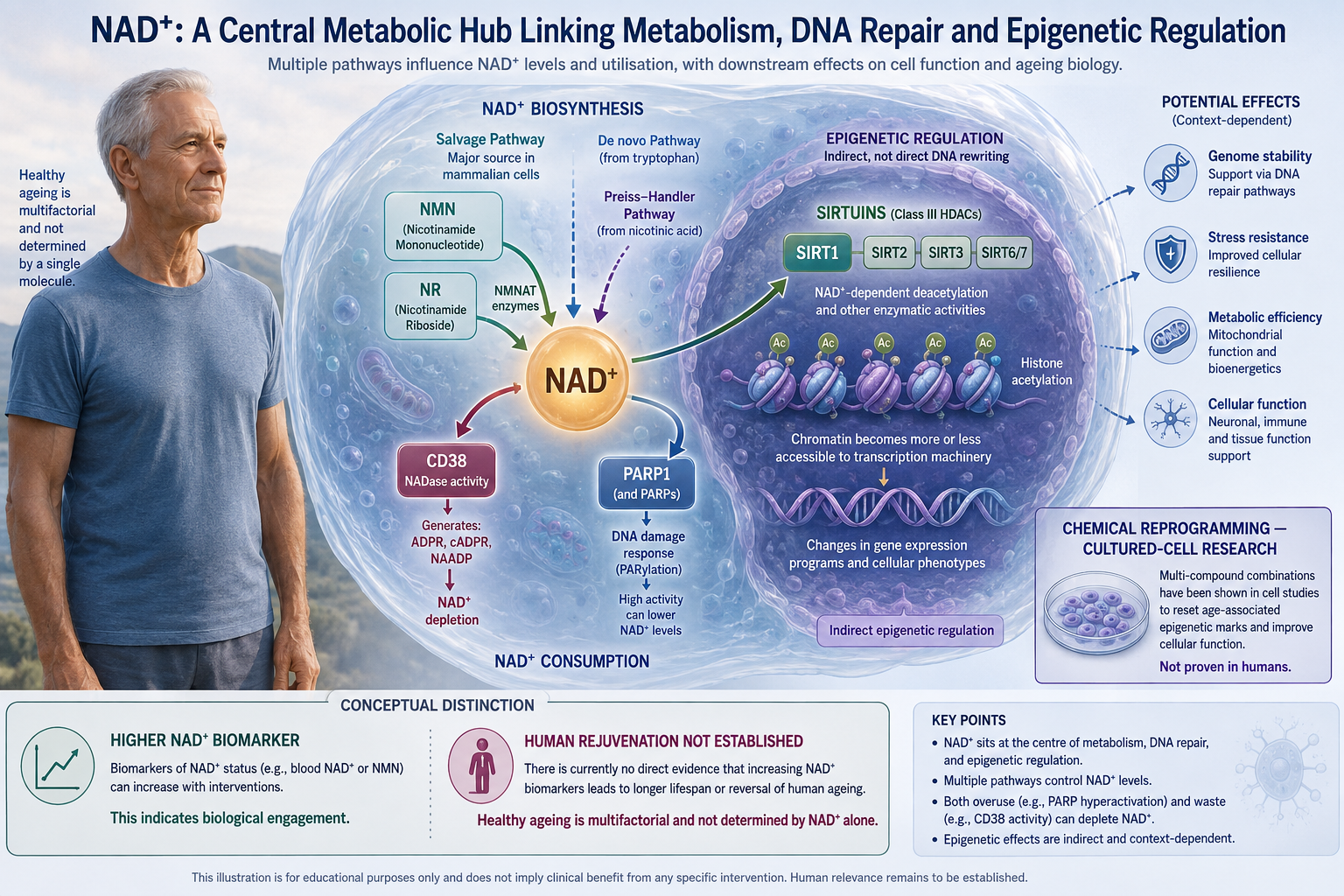
NAD⁺, short for nicotinamide adenine dinucleotide, is a molecule required for ordinary cellular metabolism. Cells also consume NAD⁺ when enzymes involved in DNA-damage responses, immune signalling and gene regulation perform their work. This places NAD⁺ at the intersection of energy metabolism and regulatory biology. (Review)
NMN, or nicotinamide mononucleotide, is one compound the body can convert into NAD⁺. NR, or nicotinamide riboside, niacin and nicotinamide enter the NAD-biosynthesis network through related routes. Controlled human studies show much more consistent evidence that NMN and NR change NAD-related blood or tissue biomarkers than evidence that they improve ageing-related clinical outcomes. (Research, Research, Review)
NAD⁺ has become prominent in epigenetic ageing research because sirtuins are a family of enzymes that require NAD⁺. Sirtuins can modify transcription factors, metabolic proteins and chromatin-associated proteins. That provides a genuine connection between NAD metabolism and epigenetic regulation, but an NAD⁺ precursor is not a targeted epigenome editor and does not perform partial cellular reprogramming. (Review, Review)
The central evidence question is therefore not simply whether NMN or NR raises NAD⁺. Several trials show that they can. The harder question is whether changing NAD⁺ produces durable improvements in function, disease risk, biological-age measures or lifespan. Human evidence for those stronger outcomes remains mixed or absent. (Research, Review, Review)
Informational only; no medical, dosing, or emergency instructions.
Quick Summary
- NAD⁺ is both a metabolic coenzyme and a substrate consumed by regulatory enzymes, including sirtuins, PARPs and CD38. (Review)
- NMN and NR are NAD⁺ precursors, meaning the body can convert them through enzymatic steps into NAD⁺; they are not direct epigenome editors. (Review)
- Controlled human NMN studies have repeatedly reported higher blood NAD-related measurements, while glucose, lipid, muscle and functional outcomes have varied. (Research, Review)
- Controlled NR studies similarly report higher blood or tissue NAD-related metabolites, but mitochondrial, metabolic and cognitive benefits are inconsistent. (Research, Research, Research)
- SIRT1 concentration, SIRT1 gene expression and SIRT1 enzymatic activity are different measurements. A rise in one should not be described automatically as greater sirtuin activity or rejuvenation. (Research, Research)
- Experimental research implicates CD38, an NAD-consuming enzyme, in age-associated tissue NAD decline, but human anti-ageing CD38 inhibition remains a frontier research area. (Research)
- NMN produced a measurable skeletal-muscle insulin-sensitivity change in one trial of postmenopausal women with prediabetes, illustrating that positive findings can be population-specific rather than universal. (Research)
- Current pooled evidence does not establish preservation of muscle mass or physical function in older adults from NMN or NR supplementation. (Review)
- No controlled human trial has demonstrated that NMN, NR, resveratrol or IV NAD⁺ extends human lifespan or produces comprehensive epigenetic rejuvenation. (Review)
- Frequently searched compounds including quercetin, fisetin, apigenin, AKG, sodium butyrate, spermidine, NADH and direct NAD⁺ products were evaluated but did not meet the same human-evidence threshold for a clinically meaningful NAD⁺–sirtuin effect. (Review, Review)
What It Is (Clinical Definition & Classification)
NAD is found in two interconvertible redox states. NAD⁺ is the oxidized form, which can accept electrons during metabolic reactions. NADH is the reduced form, which carries those electrons. Together they allow cells to transfer energy through metabolic pathways. (Review)
NAD⁺ also has a second role: enzymes can consume it as raw material for signalling reactions. Major NAD-consuming enzyme families include sirtuins, poly(ADP-ribose) polymerases, or PARPs, and CD38. NAD⁺ availability therefore depends on both how quickly cells manufacture it and how quickly these enzymes consume it. (Review)
NMN and the salvage pathway
The salvage pathway is the cellular recycling route that rebuilds NAD⁺ from nicotinamide released after NAD-consuming reactions. NAMPT, or nicotinamide phosphoribosyltransferase, converts nicotinamide into NMN. NMNAT enzymes then convert NMN into NAD⁺. (Review)
NMN is therefore not an exotic signalling molecule invented for supplementation. It is a normal intermediate in NAD metabolism. The unresolved clinical question is whether supplying additional NMN produces useful long-term outcomes beyond changing the biochemical pool. (Review, Review)
Nicotinamide riboside
NR is another NAD precursor. Cells can convert NR into NMN and then into NAD⁺. Randomized trials show that oral NR can substantially alter NAD-related metabolites in human blood and skeletal muscle. (Research, Research)
Niacin and nicotinamide
Niacin, also called nicotinic acid, and nicotinamide, also called niacinamide, are forms of vitamin B3. Both contribute to NAD biosynthesis through routes that differ from direct NMN or NR metabolism. Controlled human feeding evidence shows that inadequate niacin-equivalent intake can markedly reduce erythrocyte NAD and that repletion restores it. (Research)
Sirtuins
Humans have seven sirtuin proteins, SIRT1 through SIRT7. They differ in cellular location and targets, but all are linked to NAD-dependent enzymatic chemistry. SIRT1 is particularly prominent in ageing research because it modifies transcription factors, metabolic regulators and chromatin-associated proteins. (Review)
A deacetylase is an enzyme that removes an acetyl chemical group from a protein. Sirtuins perform NAD-dependent deacetylation or related reactions on selected targets. This can change how a protein functions or how a chromatin region is regulated. (Review)
NMN and NR should therefore be classified as metabolic and chromatin-connected interventions, not as direct epigenetic engineering technologies.
Why It Happens (Causes & Risk Factors)
Age-associated NAD changes do not have one single cause. NAD⁺ concentration reflects a balance between biosynthesis, recycling and consumption, all of which can change with age, tissue type, inflammation, metabolic state and DNA damage. (Review)
Human studies support age-associated changes in NAD metabolism, but it is inaccurate to claim that NAD⁺ falls by one fixed percentage throughout every organ. Blood, skeletal muscle, liver and brain contain different NAD pools, and the evidence is substantially stronger in some tissues and experimental systems than others. (Research, Review)
CD38 and inflammation
CD38 is an enzyme that consumes NAD⁺. Experimental research found that senescence-associated inflammation can increase CD38-positive macrophages and contribute to age-related tissue NAD decline. A macrophage is an immune cell involved in clearing damaged material and coordinating inflammatory responses. (Research)
This has made CD38 inhibition a potential longevity-research strategy. The evidence should remain labelled preclinical: inhibiting CD38 in experimental models is not evidence that an over-the-counter CD38-inhibiting compound restores NAD⁺ or slows ageing in humans. (Research)
PARPs and DNA damage
PARPs consume NAD⁺ while participating in DNA-damage responses. Greater DNA damage can therefore increase demand on the NAD pool. This creates a biological competition in which energy metabolism, sirtuins and DNA-repair-associated pathways depend on overlapping NAD resources. (Review)
Nutritional deficiency
Vitamin B3 inadequacy is a separate and established reason NAD status can decline. Controlled human feeding research showed that erythrocyte NAD fell substantially during inadequate niacin-equivalent intake and recovered during repletion. That finding concerns nutritional adequacy; it does not prove that consuming NAD precursors above adequate levels reverses ageing. (Research)
Mechanisms / Pathophysiology
The simplest way to understand the NAD–sirtuin system is to separate energy transfer, NAD consumption, and epigenetic regulation.
NAD⁺ and energy transfer
During metabolism, NAD⁺ accepts electrons and becomes NADH. NADH subsequently transfers those electrons through pathways involved in generating ATP. ATP, or adenosine triphosphate, is the molecule cells use for immediately available chemical energy. (Review)
This means NAD⁺ is fundamental to ordinary cellular metabolism regardless of whether ageing is being studied.
NAD⁺ as a consumable signalling substrate
Sirtuins, PARPs and CD38 do more than bind NAD⁺ temporarily: their reactions consume it. Consequently, raising NAD precursor availability may change substrate supply while increased CD38 or PARP activity may increase consumption. (Review)
This helps explain why supplying a precursor does not guarantee a uniform biological response. The effect depends on the tissue, enzymes present and competing demands on the NAD pool.
The sirtuin axis
SIRT1 is an NAD-dependent deacetylase. It can remove acetyl groups from selected proteins involved in metabolism, stress signalling and transcription. Other sirtuins act in different cellular compartments, including mitochondria and the nucleus. (Review)
NAD availability can therefore influence sirtuin chemistry. However:
more NAD⁺ ≠ automatically more SIRT1 activity ≠ automatically younger chromatin ≠ automatically longer lifespan.
Each step requires separate evidence.
SIRT1 concentration versus SIRT1 activity
A 2017 randomized study reported an increase in serum SIRT1 concentration after resveratrol and caloric restriction. This means more SIRT1 protein was detected in the measured serum sample. It does not show directly that SIRT1 enzymatic activity increased in muscle, brain or other target tissues. (Research)
A 2024 piceatannol-containing food trial instead measured SIRT1 mRNA expression in whole blood. mRNA represents a gene-expression signal used to produce a protein. Again, higher SIRT1 mRNA is not equivalent to demonstrating greater SIRT1 enzyme activity or rejuvenation. (Research)
This distinction is important because longevity discussions often collapse three different claims:
- the SIRT1 gene was expressed more;
- more SIRT1 protein was detected;
- SIRT1 performed more enzymatic activity in a relevant tissue.
The available human evidence does not allow those statements to be treated interchangeably.
Chromatin and epigenetic regulation
Chromatin is DNA together with proteins that package and regulate it. Histones are major chromatin proteins around which DNA is wrapped. Chemical modification of histones can alter how regulatory proteins access genomic regions. (Review)
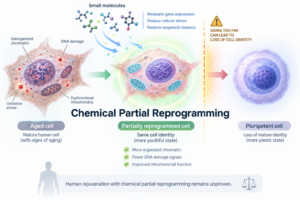
Because some sirtuins modify histones and chromatin-associated proteins, NAD availability can influence epigenetic regulation indirectly. This differs fundamentally from CRISPR–dCas9 epigenome editing, which can be directed toward a particular genomic region, or OSK/OSKM reprogramming, which can broadly alter cellular identity.
NMN is not partial reprogramming
NMN supplies a metabolic precursor. It does not deliver OCT4, SOX2 or KLF4, does not reset a cell through a defined reprogramming trajectory and does not directly rewrite selected methylation sites.
The scientifically accurate description is:
NMN is a metabolic intervention with an indirect connection to chromatin through NAD-dependent enzymes.
Symptoms, Patterns, and Differential Clues
There is no accepted clinical diagnosis of “NAD deficiency caused by ageing” based on common symptoms. Fatigue, weakness, cognitive complaints, reduced exercise tolerance and metabolic changes are nonspecific and can occur in many medical and nonmedical contexts. (Review)
NAD measurements also require compartment-specific interpretation. A higher NAD concentration in blood after supplementation does not establish equivalent increases in brain, muscle, liver or every other organ. (Research, Research)
Clinical outcomes and biochemical outcomes should therefore be kept distinct:
- NAD biomarker: did NAD⁺ or a related metabolite change?
- enzyme biomarker: did SIRT1 expression, protein or activity change?
- functional outcome: did walking, strength, cognition or insulin sensitivity change?
- clinical outcome: did disease risk or disease burden change?
- longevity outcome: did survival change?
No human trial should be described as demonstrating the last category when it measured only one of the first categories. (Review)
Evaluation & Diagnosis (Clinical Context)
NAD research uses different measurements depending on the question. Blood studies can quantify NAD⁺ or related metabolites. Muscle biopsies can examine tissue NAD metabolites and mitochondrial biology. Neurological trials have used cerebrospinal-fluid measurements or magnetic-resonance methods to examine cerebral NAD-related changes. (Research, Research)
A pharmacodynamic outcome is a measurement showing that an intervention affected its intended biological target. Increased blood NAD after NMN or NR is a pharmacodynamic outcome. It does not by itself establish that the intervention changed ageing clinically. (Research, Research)
Epigenetic clocks add another measurement layer. In older adults with mild cognitive impairment, NR increased blood NAD⁺ and exploratory analyses reported changes in PhenoAge and GrimAge, while cognition did not improve. This provides a particularly clear example of why a clock change should not be described as proven rejuvenation. (Research)
Treatment Options Snapshot (Evidence-Graded, Descriptive Only)
Supplements / Vitamins
Available direct human supplement evidence was more limited than the number of NAD-related products and longevity ingredients discussed publicly.
Tier A — Strong / Moderate Evidence
No supplement met Strong or Moderate criteria for slowing human ageing through the NAD⁺–sirtuin axis.
Tier B — Limited-Mixed Evidence
- NMN — Randomized human trials have studied NMN in postmenopausal women with prediabetes and in middle-aged or older adults. Studies reported higher blood NAD-related measurements, and one population-specific trial reported greater skeletal-muscle insulin sensitivity; walking, sleep, glucose and lipid findings have varied across studies. Follow-up has generally been short, populations differ substantially and human lifespan has not been studied. Evidence: Limited-Mixed. (Research, Research, Review)
- Nicotinamide riboside — Randomized studies in middle-aged and older adults have reported higher blood or skeletal-muscle NAD-related metabolites. Trials have not consistently reported parallel improvements in skeletal-muscle mitochondrial function, metabolic health or cognition, so biochemical target engagement is stronger than clinical evidence. Evidence: Limited-Mixed. (Research, Research, Research)
Tier C — Emerging Evidence
- Niacin / nicotinic acid — Vitamin B3 participates directly in NAD biosynthesis, and controlled feeding research demonstrates that inadequate niacin-equivalent intake lowers erythrocyte NAD concentrations. Evidence for correcting nutritional inadequacy should not be generalized to anti-ageing effects from additional niacin in already replete adults. Evidence: Emerging for ageing-specific claims. (Research, Review)
- Resveratrol — A small randomized study in healthy or slightly overweight adults reported an increase in serum SIRT1 concentration after resveratrol exposure. The study did not demonstrate direct SIRT1 enzyme activation across target tissues, and several measured metabolic variables did not move in a uniformly favourable direction. Evidence: Emerging. (Research)
- NR plus pterostilbene — Combination formulations have been examined in human NAD research. Evidence from the combined preparation cannot determine whether pterostilbene itself meaningfully raises NAD⁺ or produces the observed effects, and human rejuvenation has not been demonstrated. Evidence: Emerging. (Review)
Topical / Cosmetic Ingredients
Available direct human topical/local evidence was limited for this topic.
- Topical niacinamide — Controlled facial-skin studies reported changes in fine-line and wrinkle area, hyperpigmented spots, redness and skin yellowing in photoaged skin. These are local dermatologic outcomes and should not be described as evidence that topical niacinamide raises whole-body NAD⁺ or slows systemic ageing. Evidence: Moderate. (Research)
- Topical lipophilic niacin derivative — Human photodamaged-skin research reported changes in epidermal NAD content, epidermal differentiation and barrier measurements. The finding is unusually relevant to local NAD biology but is formulation- and tissue-specific. Evidence: Emerging. (Research)
- Topical niacinamide for pigmentation — A controlled human study reported changes in hyperpigmentation and measured skin lightness compared with vehicle. The endpoint concerns pigmentation rather than systemic NAD metabolism or longevity. Evidence: Moderate. (Research)
Dietary Sources
Direct human dietary-source evidence was narrower than the target item count.
- Niacin-equivalent dietary intake — Controlled human feeding research found that inadequate niacin-equivalent intake lowered erythrocyte NAD concentrations, followed by recovery during repletion. This demonstrates nutritional dependence of NAD physiology under deficiency conditions rather than rejuvenation from increasing intake beyond adequacy. Evidence: Moderate. (Research)
- Caloric restriction — A small randomized human study measured serum SIRT1 concentration and cardiometabolic variables during caloric restriction. SIRT1 concentration increased, but that result does not establish SIRT1 enzymatic activation, epigenetic rejuvenation or lifespan extension. Evidence: Limited-Mixed. (Research)
- Piceatannol-containing test food — A short randomized trial reported higher whole-blood SIRT1 mRNA expression after a piceatannol-containing food. The study lasted two weeks, measured expression rather than enzyme activity and involved investigators employed by the manufacturer, limiting generalization. Evidence: Emerging. (Research)
- Dietary vitamin-B3 and tryptophan sources — Niacin and tryptophan from foods enter physiological NAD-biosynthesis pathways. This establishes nutritional relevance but does not demonstrate that particular niacin-rich or tryptophan-rich foods increase human NAD⁺ enough to modify ageing in nutritionally adequate populations. Evidence: Emerging for ageing-specific claims. (Review)
What Research Has Studied
- Biochemical target engagement: NMN and NR studies frequently measure blood or tissue NAD⁺ and NAD-related metabolites. This is the most reproducible human finding in the field. (Research, Research)
- Metabolic function: trials have examined glucose regulation, insulin sensitivity, lipids and metabolic flexibility. Findings vary by intervention and population. (Research, Review)
- Muscle and physical function: studies have assessed mitochondrial respiration, walking, grip strength and physical performance. Current pooled evidence does not establish consistent preservation of muscle function in older adults. (Research, Review)
- Cognition and brain NAD biology: NR studies have examined cerebral NAD, cognitive testing and Alzheimer’s-related biomarkers. Results remain early and disease/population-specific. (Research, Research)
- Epigenetic clocks: exploratory methylation analyses have been incorporated into some NAD-precursor trials. A clock change is a biomarker result and not a substitute for a cognitive, disease or survival outcome. (Research)
- Direct sirtuin measurements: human studies have measured SIRT1 concentration or SIRT1 mRNA after resveratrol, caloric restriction or piceatannol-containing foods. These endpoints do not directly establish tissue-wide SIRT1 enzymatic activity. (Research, Research)
- NAD consumption: CD38 and PARP pathways are being studied as alternatives to adding more precursor—preserving NAD rather than only increasing synthesis. Human anti-ageing translation remains limited. (Research, Review)
- Local skin NAD biology: topical vitamin-B3 derivatives have produced measurable epidermal NAD, barrier and photoageing outcomes, illustrating that route and tissue matter. (Research, Research)
Frequently searched candidates that were evaluated but did not qualify
Quercetin was evaluated because it is widely discussed in longevity and senescence research. The collected human evidence did not establish clinically meaningful NAD⁺ restoration or SIRT1-mediated rejuvenation attributable to quercetin. (Review)
Fisetin was evaluated because of senolytic research. Senolysis—attempting to remove selected senescent cells—is mechanistically different from restoring NAD⁺ or demonstrating sirtuin activation.
Apigenin was evaluated because laboratory studies have generated interest in CD38 inhibition. Human evidence showing that apigenin meaningfully increases NAD⁺ through CD38 inhibition remains insufficient; the CD38–NAD hypothesis itself is supported most strongly by experimental research. (Research)
Pterostilbene alone was evaluated because it is structurally related to resveratrol and appears in combination NAD products. Evidence from NR-plus-pterostilbene combinations cannot be attributed automatically to pterostilbene itself. (Review)
Spermidine was evaluated because it is a prominent geroscience candidate, but its main research axis concerns autophagy rather than direct NAD⁺ replenishment.
Alpha-ketoglutarate (AKG) was evaluated because it connects metabolism with DNA- and histone-demethylating enzymes. That epigenetic mechanism is different from the NAD⁺–sirtuin axis and does not make AKG an NAD precursor.
Sodium butyrate was evaluated because it alters chromatin through inhibition of conventional histone deacetylases. Sirtuins are a separate NAD-dependent deacetylase family, so butyrate and NMN should not be described as interchangeable epigenetic interventions. (Review)
Berberine was evaluated because AMPK and metabolic signalling intersect with NAD biology. Human metabolic effects do not establish direct clinically meaningful NAD⁺ restoration.
Urolithin A was evaluated because of human mitochondrial and mitophagy research. Mitophagy is mitochondrial quality control rather than evidence that the compound restores NAD⁺ or activates sirtuins in humans.
Taurine was evaluated because of its visibility in ageing research. Its principal human and animal research questions are different from direct NAD⁺ replenishment.
GlyNAC, NAC and glycine were evaluated because redox biology overlaps with mitochondrial ageing. Their principal evidence concerns glutathione and oxidative stress rather than the NAD⁺ salvage pathway.
Omega-3 fatty acids were evaluated because they have human longevity-related biomarker research, including methylation clocks. They do not function as NAD precursors and have not established direct human NAD⁺ restoration.
NADH supplements were evaluated because NADH is chemically related to NAD⁺. NADH is the reduced electron-carrying state of the NAD pair; findings from NMN or NR cannot be assigned automatically to orally consumed NADH. (Review)
Direct oral NAD⁺ was evaluated because products are marketed on the intuitive premise that taking NAD should increase NAD. Human anti-ageing intervention evidence is substantially thinner than the NMN and NR literature. (Review)
IV NAD⁺ was evaluated because it is increasingly visible in wellness settings. Human evidence for anti-ageing efficacy remains limited, and intravenous administration introduces sterile-compounding and product-quality questions absent from ordinary oral-precursor studies. (Review, Authority)
This evaluated-but-not-admitted group is important because absence from the primary intervention list does not mean the compound was ignored; it means the evidence did not meet the article’s threshold for a human NAD⁺–sirtuin outcome.
Safety, Interactions & Regulatory Context
Most NMN and NR human trials have lasted weeks or months rather than years or decades. Short-term tolerability therefore cannot establish the long-term safety of sustained NAD manipulation across the lifespan. (Review)
NAD biology also has no simple “more is always better” interpretation. NAD⁺ participates in DNA repair, immune signalling, metabolism and cellular survival. The biological consequences of increasing precursor supply can therefore depend on tissue, disease state and which NAD-consuming pathways are active. (Review)
The U.S. regulatory context is also distinct from scientific efficacy. FDA does not preapprove dietary supplements for safety and effectiveness in the same manner as prescription drugs, and the agency maintains records of new-dietary-ingredient notifications and other ingredient-related actions. Retail availability is therefore not equivalent to regulatory confirmation of an anti-ageing claim. (Authority, Authority)
IV NAD⁺ belongs to a different safety category from oral precursor supplements because sterile administration introduces contamination, endotoxin and compounding-quality considerations. FDA has specifically reminded compounders to use ingredients appropriate for sterile compounding after reports involving NAD⁺ preparations. (Authority)
Evidence Overview
The most defensible conclusion from human NAD-precursor research is straightforward:
NMN and NR can increase NAD-related biochemical measurements in humans. Evidence that those biochemical changes produce broad anti-ageing benefits is considerably less consistent.
Controlled NMN studies have reported increased NAD-related biomarkers and selected positive outcomes such as skeletal-muscle insulin sensitivity in a defined population, walking measures or sleep variables. Other metabolic endpoints have been null or inconsistent. (Research, Research, Review)
NR shows the same target-engagement-versus-outcome distinction particularly clearly. Human studies report increased NAD-related metabolites, yet controlled trials have also found no improvement in skeletal-muscle mitochondrial function or cognition despite successful NAD augmentation. (Research, Research, Research)
This does not mean NAD⁺ is unimportant. It means a fundamental molecule can be biologically essential without supplementation above ordinary physiology producing a proportional clinical benefit.
The sirtuin connection is similarly real but frequently overstated. NAD⁺ availability affects sirtuin chemistry, and sirtuins participate in chromatin regulation. Yet the human evidence does not establish a simple chain in which taking NMN causes SIRT1 activation, which causes epigenetic rejuvenation, which causes longer life. Each link in that chain requires its own evidence. (Review, Review)
The field is also broader than supplements. CD38 inhibition seeks to reduce NAD consumption. PARP biology examines competition for NAD during DNA-damage responses. Direct sirtuin-activating drugs attempt to modify sirtuin activity pharmacologically. Topical vitamin-B3 derivatives demonstrate that local NAD manipulation may have tissue-specific effects. These approaches belong to the NAD research universe but should not be collapsed into one interchangeable “NAD booster” category. (Review, Research)
No current human evidence demonstrates that raising NAD⁺ with NMN, NR, resveratrol or IV NAD⁺ extends lifespan. Human longevity remains a substantially stronger claim than the target-engagement and short-term functional outcomes studied to date. (Review)
Evidence Confidence Classification
Overall Rating: Limited-Mixed
The evidence that NMN and NR change human NAD-related biomarkers is relatively consistent. Evidence for clinically meaningful improvements in metabolism, cognition, muscle function, epigenetic ageing or healthspan is heterogeneous, population-specific or absent, and human lifespan extension has not been demonstrated. (Review, Review, Review)
What Does Not (Evidence Gaps)
- NMN as proven human rejuvenation — Controlled trials show NAD-related biochemical changes and some population-specific outcomes, but pooled evidence does not establish broad metabolic, physical-function or lifespan effects. Longer follow-up and clinically meaningful endpoints remain major evidence gaps. (Review, Review)
- NR as proven cognitive or mitochondrial rejuvenation — NR raised NAD-related measurements without improving cognition in one older-adult MCI trial and without improving several skeletal-muscle mitochondrial outcomes in another study. Successful NAD elevation therefore cannot be treated as proof of downstream rejuvenation. (Research, Research)
- Resveratrol as established human SIRT1 activation — A small human trial reported higher serum SIRT1 concentration, but protein concentration is not the same as direct enzymatic activity in relevant tissues. The clinical meaning of the biomarker remains uncertain. (Research)
- Quercetin, fisetin or apigenin as established NAD boosters — These candidates have mechanistic or adjacent geroscience rationales, but qualifying human evidence showing a clinically meaningful NAD⁺-restoration effect was not identified. Mechanistic plausibility cannot substitute for a human outcome. (Review)
- NADH or direct oral NAD⁺ as evidence-equivalent to NMN and NR — NADH represents a different redox state, while direct NAD⁺ has a smaller human intervention literature. Findings from NMN and NR precursor trials should not be transferred automatically to these products. (Review)
- IV NAD⁺ as established anti-ageing therapy — Current human anti-ageing evidence remains limited, while sterile intravenous preparations introduce additional compounding-quality considerations. Visibility in wellness clinics is not equivalent to demonstrated efficacy. (Review, Authority)
FAQ
1. What is NAD⁺?
NAD⁺ is nicotinamide adenine dinucleotide, a molecule required for energy-transfer reactions and consumed by enzymes including sirtuins, PARPs and CD38. It therefore participates in both metabolism and cellular regulation. (Review)
2. What is NMN?
NMN is nicotinamide mononucleotide, an intermediate in the pathway cells use to manufacture NAD⁺. The enzyme NMNAT converts NMN into NAD⁺. (Review)
3. What is nicotinamide riboside?
Nicotinamide riboside, or NR, is another NAD precursor. Human trials consistently show changes in circulating or tissue NAD-related metabolites after NR, while functional results remain mixed. (Research, Research)
4. Is NMN the same as NAD⁺?
No. NMN is a precursor used to manufacture NAD⁺. A higher NMN intake therefore represents precursor supplementation rather than direct replacement of every intracellular NAD pool. (Review)
5. What is the difference between NAD⁺ and NADH?
NAD⁺ is the oxidized electron-accepting form, while NADH is its reduced electron-carrying form. They cycle between these states during cellular metabolism. (Review)
6. What is the NAD salvage pathway?
The salvage pathway recycles nicotinamide back into NAD⁺. NAMPT converts nicotinamide into NMN, and NMNAT converts NMN into NAD⁺. (Review)
7. What are sirtuins?
Sirtuins are a family of seven mammalian proteins, SIRT1 through SIRT7, whose enzymatic reactions depend on NAD⁺. They regulate selected metabolic, stress-response and chromatin-associated proteins. (Review)
8. What is SIRT1?
SIRT1 is an NAD-dependent enzyme that removes acetyl groups from selected proteins. It is studied in metabolism, stress biology and gene regulation, but its concentration in blood should not be confused with direct enzyme activity in every tissue. (Review, Research)
9. Does NMN raise NAD⁺ in people?
Several randomized studies report increases in blood NAD-related measurements after NMN. This is one of the better-supported findings in human NMN research. (Research, Research)
10. Does NMN slow human ageing?
That has not been demonstrated. Human trials are relatively short and mostly measure NAD biomarkers, metabolic variables, sleep or physical performance rather than age-related disease incidence or lifespan. (Review, Review)
11. Does NMN improve insulin sensitivity?
A randomized trial in postmenopausal women with prediabetes reported greater skeletal-muscle insulin sensitivity after NMN. The finding is population-specific and should not be generalized automatically to metabolically healthy adults, men or other populations. (Research)
12. Does NMN improve muscle function?
Individual studies have reported selected physical-performance findings, but a 2025 systematic review and meta-analysis did not support NMN or NR for preserving muscle mass or physical function in adults whose mean age was over 60. (Research, Review)
13. Does NR improve cognition?
A randomized trial in older adults with mild cognitive impairment found that NR increased blood NAD⁺ but did not alter cognition. This is a useful example of target engagement without a parallel clinical outcome. (Research)
14. Does increasing NAD⁺ activate SIRT1?
NAD⁺ is required for SIRT1 chemistry, so substrate availability is biologically relevant. However, higher NAD⁺ does not prove that SIRT1 activity increased sufficiently in a particular tissue to produce a clinical effect. (Review)
15. Does resveratrol activate SIRT1 in humans?
A small randomized study reported higher serum SIRT1 concentration after resveratrol. Serum concentration is not equivalent to direct measurement of SIRT1 enzymatic activity throughout the body, so the stronger statement remains unproven. (Research)
16. Is quercetin an NAD⁺ booster?
Quercetin has been investigated in ageing and senescence research, but qualifying human evidence demonstrating clinically meaningful NAD⁺ restoration was not identified in this review. It therefore should not be placed in the same evidence category as NMN or NR. (Review)
17. Is apigenin an NAD⁺ booster?
Apigenin is discussed in preclinical CD38 research, which makes it mechanistically interesting. Human evidence showing meaningful NAD restoration through this pathway remains insufficient. (Research)
18. Is sodium butyrate a sirtuin activator?
Sodium butyrate is primarily discussed as an inhibitor of conventional histone deacetylases. Sirtuins are a different NAD-dependent deacetylase family, so sodium butyrate should not be described simply as another form of SIRT1 activation. (Review)
19. Is IV NAD⁺ proven to work for anti-ageing?
Human anti-ageing evidence remains limited compared with its commercial visibility. Intravenous administration also introduces sterile-compounding and quality issues that do not apply in the same way to oral precursor studies. (Review, Authority)
20. What evidence would show genuine NAD-related human rejuvenation?
A stronger case would require replicated improvements in meaningful function or age-related disease outcomes, durable effects and acceptable long-term safety. Ultimately, evidence of reduced age-related morbidity or mortality would carry much more weight than blood NAD⁺ or an isolated epigenetic-clock result. (Review)
Resources
NAD⁺ Metabolism and Its Roles in Cellular Processes During Ageing — Review — https://pubmed.ncbi.nlm.nih.gov/33353981/
NAD⁺ and Sirtuins in Ageing and Disease — Review — https://pubmed.ncbi.nlm.nih.gov/24786309/
Age-Associated Changes in Oxidative Stress and NAD⁺ Metabolism — Research — https://pubmed.ncbi.nlm.nih.gov/22848760/
Senescent Cells Promote Tissue NAD⁺ Decline During Ageing — Research — https://pubmed.ncbi.nlm.nih.gov/33199924/
NMN and Muscle Insulin Sensitivity in Prediabetes — Research — https://pubmed.ncbi.nlm.nih.gov/33888596/
Oral NMN Administration and Human NAD⁺ — Research — https://pubmed.ncbi.nlm.nih.gov/35479740/
NMN Dose-Ranging Randomized Trial — Research — https://pubmed.ncbi.nlm.nih.gov/36482258/
NMN, Walking Speed and Sleep in Older Adults — Research — https://pubmed.ncbi.nlm.nih.gov/38789831/
NMN Randomized-Trial Meta-Analysis — Review — https://pubmed.ncbi.nlm.nih.gov/39116016/
NMN and NR for Muscle Mass and Function in Older Adults — Review — https://pubmed.ncbi.nlm.nih.gov/40275690/
Nicotinamide Riboside in Healthy Middle-Aged and Older Adults — Research — https://pubmed.ncbi.nlm.nih.gov/29599478/
NR and Skeletal-Muscle Mitochondrial Function — Research — https://pubmed.ncbi.nlm.nih.gov/31710095/
NR and Muscle NAD Metabolism in Overweight Adults — Research — https://pubmed.ncbi.nlm.nih.gov/32320006/
NR in Mild Cognitive Impairment — Research — https://pubmed.ncbi.nlm.nih.gov/37994989/
NADPARK Phase I Nicotinamide Riboside Trial — Research — https://pubmed.ncbi.nlm.nih.gov/35235774/
Resveratrol, Caloric Restriction and SIRT1 — Research — https://pubmed.ncbi.nlm.nih.gov/28029409/
Piceatannol and Human SIRT1 Expression — Research — https://pubmed.ncbi.nlm.nih.gov/38792610/
Niacinamide and Ageing Facial Skin — Research — https://pubmed.ncbi.nlm.nih.gov/16029679/
Topical Niacin Derivative and Epidermal NAD — Research — https://pubmed.ncbi.nlm.nih.gov/17518989/
Niacinamide and Human Hyperpigmentation — Research — https://pubmed.ncbi.nlm.nih.gov/12100180/
Dietary Niacin Equivalents and Human NAD Status — Research — https://pubmed.ncbi.nlm.nih.gov/2621487/
NAD⁺ Supplementation for Anti-Ageing and Wellness — Review — https://pubmed.ncbi.nlm.nih.gov/41655607/
Submitted New Dietary Ingredient Notifications — Authority — https://www.fda.gov/food/new-dietary-ingredient-ndi-notification-process/submitted-75-day-premarket-notifications-new-dietary-ingredients
FDA Sterile-Compounding Reminder Relevant to NAD⁺ — Authority — https://www.fda.gov/drugs/human-drug-compounding/fda-reminds-compounders-use-ingredients-suitable-sterile-compounding
FDA Dietary Supplement Ingredient Information — Authority — https://www.fda.gov/food/dietary-supplements/information-select-dietary-supplement-ingredients-and-other-substances
More from the Medical & Health Conditions Encyclopedia