

Introduction
Epigenetic engineering of ageing is the deliberate attempt to alter the regulatory systems that determine which genes a cell uses, how strongly those genes are expressed, and whether a cell preserves its mature identity. These systems include DNA methylation, chemical marks on DNA-packaging proteins called histones, chromatin organisation, regulatory RNA and broader gene-expression networks. Unlike conventional gene editing, epigenetic engineering does not necessarily change the DNA sequence itself. (Review, Review)
The field includes interventions with very different levels of precision. Partial cellular reprogramming and CRISPR–dCas9 epigenome editing directly manipulate regulatory systems. Rapamycin, metformin, nicotinamide mononucleotide, or NMN, alpha-ketoglutarate, or AKG, and sodium butyrate affect pathways, metabolic cofactors or enzymes connected to epigenetic regulation. They do not precisely install a complete youthful gene-expression programme. (Review, Review)
David Sinclair and colleagues brought wider attention to the field through research on partial reprogramming, loss of epigenetic information and chemical combinations intended to shift old cells towards younger gene-expression patterns. Their 2023 chemical-reprogramming study was conducted in cultured cells. It did not test an anti-ageing pill in people or demonstrate human lifespan extension. (Research)
Most direct rejuvenation evidence remains cellular or animal-based. A registered Phase 1 study is evaluating a localized OSK-based intervention in adults with glaucoma or non-arteritic anterior ischemic optic neuropathy. The study is designed principally to evaluate safety and tolerability and does not yet establish systemic human rejuvenation. (Research)
Informational only; no medical, dosing, or emergency instructions.
Quick Summary
- Epigenetic engineering changes gene regulation, chromatin or cellular state without necessarily changing the DNA sequence. (Review)
- DNA methylation is the attachment of small methyl groups to DNA; its biological effect depends on the genomic location. (Review)
- Histones are proteins around which DNA is packaged, and histone modifications can alter how accessible a genomic region is. (Review)
- Partial reprogramming attempts to restore selected youthful characteristics without erasing mature cellular identity. (Review)
- CRISPR–dCas9 editors can target methylation, histone marks or gene activity without cutting DNA. (Review)
- Sinclair’s chemical-reprogramming research identified multi-compound cocktails in cultured cells, not a proven anti-ageing pill for humans. (Research)
- Sodium butyrate is a histone-deacetylase inhibitor and was studied as a component or enhancer of chemical-reprogramming cocktails. (Research)
- AKG is a metabolic cofactor used by enzymes involved in DNA and histone demethylation, but human rejuvenation evidence remains early. (Research)
- PhenoAge, GrimAge2 and DunedinPACE are different DNA-methylation models; changes in their scores do not automatically prove rejuvenation. (Review)
- No intervention has demonstrated safe, durable, whole-body epigenetic rejuvenation in humans. (Review, Research)
What It Is (Clinical Definition & Classification)
Epigenetics describes molecular processes that influence gene use without requiring a change in DNA sequence. Major mechanisms include DNA methylation, histone modification, chromatin remodelling and regulatory RNA. (Review)
Epigenetic engineering is the intentional manipulation of those processes. In ageing research, it can be divided into four levels. (Review, Review)
Indirect pathway modulation
Indirect interventions change nutrient sensing, energy metabolism, inflammation, autophagy or cellular stress responses. Rapamycin, metformin, NMN, nicotinamide riboside, spermidine and many senescence-related compounds fit mainly within this category. Their effects on chromatin occur downstream of broader biological pathways. (Research, Review)
Chromatin-enzyme and metabolic-cofactor modulation
Some compounds directly influence enzymes that add or remove epigenetic marks. Sodium butyrate inhibits several histone deacetylases. NAD⁺ is required by sirtuin enzymes. AKG is required by several DNA- and histone-demethylating enzymes. These mechanisms are epigenetically relevant but remain less precise than directing an editor to one genomic site. (Review)
Targeted epigenome editing
Targeted editors use programmable DNA-binding systems such as dCas9 to deliver a regulatory enzyme to a selected genomic region. They can add or remove DNA methylation, modify histones or activate or repress a target gene without cutting DNA. (Review)
Cell-state reprogramming
Cell-state reprogramming alters broad gene-regulatory networks. Full reprogramming creates a stem-cell-like state, while partial reprogramming aims to modify age-associated features without erasing mature identity. (Review, Review)
Targeted editing and cell-state reprogramming represent epigenetic engineering in its narrowest biotechnology sense. Metabolic and supplement interventions are more accurately described as epigenetically connected or chromatin-active.
Why It Happens (Causes & Risk Factors)
Ageing is associated with both gains and losses of DNA methylation at different genomic locations. It is also associated with changes in histone marks, chromatin accessibility, nuclear organisation and the stability of gene-expression programmes. These patterns differ between tissues and cell types. (Review)
Some age-associated epigenetic changes may contribute to dysfunction. Others may be compensatory responses or molecular records of earlier exposures. A methylation site that predicts age is not necessarily a site that causes ageing. (Review)
Smoking, environmental exposure, inflammation, metabolic disease, diet and changes in blood-cell composition can influence epigenetic measurements. A blood-based ageing result can therefore reflect several processes rather than one universal biological-age mechanism. (Review)
Some epigenetic marks are dynamically reversible. Other regulatory states can be maintained through feedback loops, self-recruiting protein complexes and cellular-memory systems. Reversibility depends on the mark, genomic region, cell type and biological state. (Review)
Mechanisms / Pathophysiology
In plain language, chromatin acts partly as a packaging and indexing system for DNA. It influences which sections of DNA are open for use and which remain relatively inaccessible. Age-associated disruption of this organisation may cause cells to use genes less reliably or lose aspects of their specialised identity. (Review)
DNA methylation
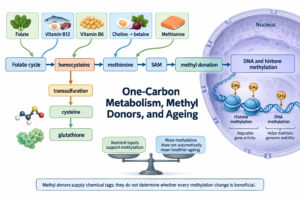
DNA methylation is the attachment of a small chemical group called a methyl group to DNA. It often occurs at a CpG site, meaning a location where a cytosine DNA letter is followed by a guanine DNA letter. Methylation can influence nearby gene activity, but the effect depends on the precise genomic location. (Review)
DNA methyltransferases are enzymes that add methyl groups. TET enzymes participate in chemical reactions that can begin the modification or removal of those methyl marks. Age-associated methylation includes both gains and losses at different sites rather than one uniform increase or decrease. (Review)
CRISPR–dCas9 systems can carry DNA-methylating or demethylating domains to selected regions without cutting DNA. This allows researchers to test whether a methylation site contributes to gene regulation or is merely associated with ageing. (Review)
A 2025 study found that editing individual age-associated CpGs also altered correlated CpGs and affected epigenetic-clock calculations. This shows that methylation sites can operate within wider regulatory networks, but it does not demonstrate whole-cell or organismal rejuvenation. (Research)
Histones, acetylation and HDACs
Histones are proteins around which DNA is wrapped. Chemical marks on histones influence how tightly DNA is packaged and which regulatory proteins can reach it. (Review)
Acetylation is the addition of an acetyl chemical group. Histone acetylation is often associated with more accessible chromatin, although the outcome depends on the specific site and cell type. HDAC means histone deacetylase, an enzyme that removes acetyl groups from histones and other proteins. (Review)
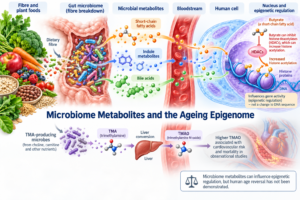
Sodium butyrate can inhibit several HDAC enzymes. This can produce broad changes in gene expression, but it does not tell the cell exactly which ageing-related genes should be altered. HDAC inhibition can therefore have different or opposing effects in different tissues. (Review)
NAD⁺ and sirtuins
NAD⁺ is a molecule required for cellular energy reactions, DNA-damage responses and several signalling enzymes. Sirtuins are one family of NAD⁺-dependent enzymes that remove acetyl groups from selected proteins. (Research)
SIRT1 is one member of the sirtuin family. It participates in metabolism, stress responses and gene regulation. A measured SIRT1 concentration means the amount of SIRT1 protein detected in a blood or tissue sample; it does not necessarily indicate how active the enzyme is. (Review)
NMN and nicotinamide riboside are NAD⁺ precursors. Human trials show that they can raise NAD⁺-related metabolites, but this does not demonstrate that they reset cellular identity or reproduce partial reprogramming. (Research, Research)
AKG and demethylation
Alpha-ketoglutarate, abbreviated AKG, is a normal molecule involved in cellular energy and amino-acid metabolism. It is also required by TET enzymes and Jumonji-family enzymes involved in DNA and histone demethylation. (Review)
AKG therefore occupies a partly different mechanistic category from NMN, omega-3 fatty acids and metformin. It is directly connected to demethylating enzymes, while NMN primarily influences NAD⁺ availability, omega-3 fatty acids affect lipid and inflammatory biology, and metformin primarily alters metabolic signalling. Distinct mechanisms do not demonstrate that combining these interventions creates an additive clinical benefit. (Review, Research)
Partial cellular reprogramming
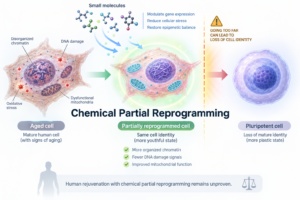
OCT4, SOX2, KLF4 and MYC are transcription factors collectively called OSKM or the Yamanaka factors. Transcription factors are proteins that regulate the activity of many genes. Full OSKM exposure can convert a mature cell into a pluripotent, stem-cell-like state. (Review)
OSK uses OCT4, SOX2 and KLF4 without MYC. MYC is commonly omitted because it has strong effects on proliferation and cancer-related biology, although removing it does not make the remaining factors risk-free. (Review)
Partial reprogramming restricts the factors, duration, frequency or tissue of exposure. Its goal is to alter selected age-associated features before the cell loses its mature identity. The boundary between rejuvenation and early dedifferentiation remains one of the field’s central unresolved questions. (Review)
Chemical reprogramming
Chemical reprogramming uses combinations of small molecules to alter regulatory and signalling pathways without delivering reprogramming-factor genes. A chemical cocktail means a defined mixture of compounds studied together rather than one active ingredient. (Research)
A transcriptome is the collection of RNA molecules produced by a cell and therefore reflects which genes are active. Transcriptomic age is a statistical estimate based on whether a cell’s gene-expression pattern resembles younger or older reference cells. A younger transcriptomic-age result does not prove that a cell or person has become younger. (Research)
The term nucleocytoplasmic compartmentalisation describes how effectively a cell keeps nuclear molecules within the nucleus and cytoplasmic molecules outside it. Sinclair and colleagues used an assay of this separation as one cell-function measure in their chemical-reprogramming research. (Research)
Symptoms, Patterns, and Differential Clues
Epigenetic ageing is not a symptom-defined clinical diagnosis. It is investigated through DNA-methylation patterns, histone marks, chromatin accessibility, RNA expression and measurements of cellular identity. (Review)
Weakness, slower recovery, cognitive change, impaired regeneration or organ dysfunction cannot be assigned to an epigenetic mechanism from one clock test. Disease, smoking, inflammation, medication exposure, nutrition, tissue composition and laboratory variation can affect epigenetic measurements. (Review, Review)
A blood-based methylation estimate may not represent ageing in the retina, brain, muscle, liver or other tissues. Tissue specificity is therefore an important limitation when interpreting claims about systemic rejuvenation. (Review)
Evaluation & Diagnosis (Clinical Context)
An epigenetic clock is a mathematical model that uses DNA-methylation measurements to estimate age or an ageing-related characteristic. Different clocks were trained to predict different outcomes and should not be treated as interchangeable. (Review)
PhenoAge is a DNA-methylation model intended to reflect a physiological and mortality-associated ageing pattern. It was developed using clinical measures related to health and mortality rather than chronological age alone. A lower PhenoAge result is a model output, not direct proof that every tissue is younger. (Review)
GrimAge2 is a later-generation methylation predictor designed around molecular signals associated with mortality and age-related disease risk. It estimates a risk-related ageing pattern and does not literally measure the age of every cell. (Review)
DunedinPACE is intended to estimate the pace at which ageing-related physiological changes are occurring. It is expressed as a modelled rate rather than a literal prediction of remaining lifespan. (Review)
An intervention can affect one clock while leaving another unchanged. Clock findings should therefore be interpreted alongside tissue-specific measurements, physical function, disease outcomes, durability, maintenance of cellular identity and long-term safety. (Review)
Treatment Options Snapshot (Evidence-Graded, Descriptive Only)
Procedures / Devices / Technologies
- OSK partial reprogramming — Preclinical systems have used OCT4, SOX2 and KLF4 to alter age-associated molecular and tissue outcomes. A registered Phase 1 optic-neuropathy study is measuring safety, tolerability and visual outcomes, but no human rejuvenation result has been established. Evidence: Emerging. (Research)
- OSKM partial reprogramming — Cellular and animal research has measured epigenetic age, regeneration, tissue function and survival-related outcomes after restricted OSKM expression. Dedifferentiation, abnormal proliferation and tissue-specific responses prevent clinical generalisation. Evidence: Emerging. (Review, Review)
- CRISPR–dCas9 DNA-methylation editing — Laboratory systems can recruit methylating or demethylating domains to selected loci and measure site-specific methylation and target-gene expression. Ageing applications remain preclinical, and bystander changes have been observed. Evidence: Emerging. (Review, Research)
- Targeted histone editing — Programmable systems can recruit histone-modifying, activating or repressing domains to selected genomic regions. Studies measure local chromatin marks and target-gene transcription, but human anti-ageing efficacy has not been demonstrated. Evidence: Emerging. (Review)
- Chemical partial reprogramming — Small-molecule combinations have produced changes in transcriptomic-age and cell-based functional assays in cultured human cells. These findings do not establish tissue-level control, long-term safety or human rejuvenation. Evidence: Emerging. (Research)
Prescription / Medical Therapies
- Rapamycin and rapalogs — Controlled human research in older adults has measured immune outcomes after mTOR inhibition. One study reported an increase in influenza-vaccine response, but direct epigenetic reprogramming and human lifespan extension were not studied. Evidence: Limited-Mixed. (Research)
- Selective TORC1 inhibitors — Randomized older-adult studies assessed infection rates, antiviral gene expression and vaccine responses. Findings varied across agents and outcomes and do not establish a general human anti-ageing effect. Evidence: Limited-Mixed. (Research, Research)
- Metformin — Mechanistic reviews describe effects on AMPK, mitochondrial metabolism and epigenetically connected enzymes. Human evidence mainly concerns blood-glucose and disease-specific outcomes, while direct reversal of ageing-associated epigenetic programmes remains unproven. Evidence: Limited-Mixed. (Review, Review)
- Pharmaceutical HDAC inhibitors — These medicines produce measurable histone-acetylation and gene-expression changes in established disease settings such as selected cancers. Broad genomic activity and toxicity prevent generalisation to anti-ageing use. Evidence: Emerging for ageing. (Review)
- Senolytic and senomorphic strategies — Senolytics attempt to remove selected senescent cells, while senomorphics modify their secretory behaviour. Research measures senescence biomarkers and disease-specific functions, but broad human rejuvenation has not been demonstrated. Evidence: Emerging. (Review)
Supplements / Vitamins (Research Context Only)
Available direct human supplement evidence was more limited than the evidence available for standard medical treatment categories in this field.
No supplement has demonstrated controlled partial cellular reprogramming or precision epigenome editing in humans.
Tier A — Strong / Moderate Evidence
No supplement met Strong or Moderate criteria for human epigenetic rejuvenation.
Tier B — Limited-Mixed Evidence
- Nicotinamide riboside — Randomized trials in middle-aged and older adults reported increases in blood NAD⁺ concentrations. Physiological findings were inconsistent, and a trial in older adults with mild cognitive impairment found no improvement in cognition. Evidence: Limited-Mixed. (Research, Research)
- Spermidine — A randomized trial in older adults with subjective cognitive decline measured memory performance and cognition-related biomarkers. The larger trial did not significantly change the primary memory outcome. Evidence: Limited-Mixed. (Research)
- Omega-3 fatty acids — A post hoc randomized analysis reported small changes in PhenoAge, GrimAge2 and DunedinPACE over three years. The parent trial found no significant improvement in several principal clinical outcomes, so clock findings do not establish rejuvenation. Evidence: Limited-Mixed. (Research, Research)
- Vitamin D — In the same older-adult trial, vitamin D contributed to an additive PhenoAge result in combination analysis but did not produce consistent changes across clocks or principal clinical outcomes. Evidence: Limited-Mixed. (Research, Research)
- Resveratrol — Human studies have assessed metabolic and sirtuin-related outcomes. A meta-analysis found no significant overall change in measured SIRT1 protein concentrations, and epigenetic-age reversal has not been demonstrated. Evidence: Limited-Mixed. (Review)
Tier C — Emerging Evidence
- Nicotinamide mononucleotide — A small randomized trial reported increased whole-blood NAD⁺ concentrations without clear changes in several metabolic outcomes. Reviews have not established consistent preservation of muscle mass or physical function in older adults. Evidence: Emerging. (Research, Review)
- Alpha-ketoglutarate — Small human investigations have measured DNA-methylation age estimates, while controlled trials remain limited or ongoing. Combination formulations, limited controls and absence of validated functional outcomes prevent conclusions about rejuvenation. Evidence: Emerging. (Research, Research)
- GlyNAC — GlyNAC means glycine plus N-acetylcysteine, or NAC. Small older-adult trials measured glutathione, oxidative-stress, mitochondrial and physical-function outcomes, but the combination has not demonstrated epigenome editing or lifespan extension. Evidence: Emerging. (Research)
- NAC alone — NAC supplies cysteine, one of the three amino-acid components used to produce glutathione. Evidence from GlyNAC trials cannot be assigned automatically to NAC alone because those studies supplied both glycine and NAC. Evidence: Emerging for ageing-related use. (Research)
- Glycine alone — Glycine is another component of glutathione and is abundant in collagen protein. Glycine-only exposure is not equivalent to GlyNAC, and human ageing evidence must remain separate from trials of the combined formulation. Evidence: Emerging for ageing-related use. (Research)
- Sodium butyrate — Sodium butyrate inhibits several HDAC enzymes and was evaluated as part of or an enhancer of chemical-reprogramming combinations in cultured cells. Human supplementation studies have measured metabolic, inflammatory and gene-expression outcomes in specific metabolic populations, not systemic rejuvenation. Evidence: Emerging. (Research, Research)
Topical / Cosmetic Ingredients (Research Context Only)
Available direct human topical evidence was limited and concerns local skin outcomes rather than systemic rejuvenation.
- Topical rapamycin — An exploratory randomized study in older human skin measured p16 expression, collagen VII and clinical appearance. The trial was small and local, preventing generalisation to whole-body ageing. Evidence: Emerging. (Research)
- Topical retinol — Controlled and comparative photoageing studies reported changes in facial-wrinkle measures and skin-remodelling markers. Irritation and formulation differences limit generalisation, and the outcomes do not represent partial reprogramming. Evidence: Moderate. (Research, Review)
- Bakuchiol — A randomized comparison reported changes in wrinkle surface area and hyperpigmentation, with less scaling and stinging than retinol. The study assessed local appearance rather than systemic or locus-specific epigenetic change. Evidence: Limited-Mixed. (Research)
Dietary Sources (Research Context Only)
Direct human dietary-source evidence was narrower than the target item count.
- Multi-component diet and lifestyle programme — A small randomized study in healthy men aged 50–72 reported a change in Horvath DNA-methylation age over eight weeks. The programme combined diet, sleep, exercise, relaxation and supplements, so the contribution of food alone cannot be isolated. Evidence: Emerging. (Research)
- Mediterranean-style dietary intervention — Randomized trial analyses reported changes in selected DNA-methylation ageing biomarkers. The clinical meaning of the changes and the contribution of individual foods remain uncertain. Evidence: Limited-Mixed. (Research)
- Fermentable fibre and resistant starch — Human dietary studies have measured short-chain-fatty-acid concentrations, microbiome features and metabolic outcomes. These findings connect dietary fibre to butyrate production but do not demonstrate epigenetic rejuvenation. Evidence: Emerging. (Research)
- Methyl-donor food patterns — Folate, vitamin B12, choline, betaine and methionine contribute to the production of methyl-group donors. More methyl availability does not predictably create younger methylation because the biological effect depends on where methyl groups are added. Evidence: Limited-Mixed. (Review)
What Research Has Studied
David Sinclair’s research: what the “anti-ageing pill” study found
David Sinclair was a senior author of a 2023 study that screened chemical combinations intended to shift old or senescent cells towards younger gene-expression patterns. The researchers identified six cocktails that changed transcriptomic-age estimates and a cell-compartmentalisation assay in cultured cells. The study did not administer an anti-ageing pill to people and did not measure human lifespan, disease prevention or whole-body rejuvenation. (Research)
The cocktails contained combinations of chromatin-active and signalling compounds. Examples included valproic acid, tranylcypromine, CHIR99021, RepSox and forskolin. These include prescription medicines and experimental laboratory compounds and should not be interpreted as a consumer supplement combination. (Research)
Sodium butyrate and AKG were studied as additions or enhancers within the cellular system. Their inclusion does not show that either compound works alone, that oral exposure reaches the same cellular concentrations, or that taking them recreates the complete laboratory cocktail. (Research)
Wider intervention universe
The categories below map the research landscape. Inclusion means that the candidate is studied or discussed in ageing biology, not that it is effective or suitable for personal use.
Direct reprogramming and precision editing
- OSK and OSKM partial reprogramming — animal and early clinical-safety research. (Review, Research)
- CRISPR–dCas9 methylation and demethylation editors — cellular and preclinical research. (Review)
- Targeted histone activation or repression — cellular and preclinical research. (Review)
- Chemical partial-reprogramming cocktails — cultured-cell research. (Research)
- RNA-based transient reprogramming — cellular and preclinical research. (Review)
Chromatin-active metabolites and cofactors
- Sodium butyrate — HDAC inhibitor with cellular cocktail and condition-specific human evidence. (Research, Research)
- AKG — demethylase cofactor with mechanistic, animal and early human biomarker evidence. (Research)
- NAD⁺ — sirtuin and DNA-repair cofactor with mechanistic and human metabolite evidence. (Research)
- Beta-hydroxybutyrate — ketone and signalling metabolite with mainly mechanistic and disease-specific evidence. (Review)
- S-adenosylmethionine — methyl-group donor with mechanistic relevance but no locus-specific control. (Review)
- Succinate and fumarate — metabolic regulators of AKG-dependent enzymes with mechanistic evidence. (Review)
Nutrient-sensing and metabolic candidates
- Rapamycin and rapalogs — animal lifespan and human immune evidence. (Research)
- Metformin — extensive diabetes evidence and indirect ageing research. (Review)
- NMN and nicotinamide riboside — human NAD⁺ biomarker evidence with inconsistent functional findings. (Research, Research)
- Spermidine — mixed human cognitive evidence and mechanistic autophagy research. (Research)
- Resveratrol — mixed human metabolic and sirtuin-related evidence. (Review)
- Acarbose, canagliflozin, lithium and 17α-estradiol — mainly animal or disease-specific geroscience research, not established epigenetic-rejuvenation treatments. (Review)
Redox, mitochondrial and proteostasis candidates
- GlyNAC — small older-adult metabolic and functional trials. (Research)
- NAC alone and glycine alone — separate precursors that do not inherit the combined trial evidence automatically. (Research)
- Urolithin A — human mitochondrial and muscle-related biomarker studies, not direct epigenetic editing.
- Coenzyme Q10 — condition-specific mitochondrial and cardiovascular research, not reprogramming.
- Taurine — animal ageing findings and human observational evidence, without demonstrated human lifespan extension.
- Ergothioneine and alpha-lipoic acid — redox and disease-specific research, with no demonstrated cellular-age reset.
Senescence-related candidates
- Fisetin and quercetin — mainly preclinical or early condition-specific senolytic research.
- Dasatinib plus quercetin — early human disease-specific senolytic studies, not established anti-ageing treatment.
- Navitoclax and FOXO4-related agents — preclinical senolytic research.
- Senomorphics — experimental suppression of senescence-associated secretions, not direct cell-state rejuvenation. (Review)
This classification prevents cellular or animal candidates from being presented as if they had the same evidence as human clinical interventions.
Safety, Interactions & Regulatory Context
Partial reprogramming may erase mature identity, promote abnormal proliferation or create incompletely reprogrammed states. Risk depends on factor selection, expression duration, target tissue, delivery system and whether expression can be stopped. (Review)
Epigenome editors avoid DNA cleavage but can still produce off-target binding, bystander methylation and wider regulatory-network effects. Editing one site may therefore affect connected sites or genes. (Review, Research)
Chemical-reprogramming cocktails can contain prescription medicines and laboratory compounds with broad effects. Cell-culture findings do not establish that the combinations are safe for oral use or that their components can be separated into an effective consumer regimen. (Research)
Rapamycin, metformin, pharmaceutical HDAC inhibitors and supplements affect clinically important pathways beyond ageing biology. Their inclusion in geroscience research does not establish safety or effectiveness for general anti-ageing use. (Research, Review)
Evidence Overview
The strongest evidence that epigenetic states can be engineered comes from induced pluripotency, targeted epigenome editing and controlled cellular experiments. These fields demonstrate that gene-regulatory states are modifiable. (Review)
Partial reprogramming has produced rejuvenation-like molecular, regenerative and animal findings. Broad resetting is also its main safety concern because the same intervention may destabilise cellular identity or promote abnormal growth. (Review, Review)
Sinclair’s chemical-reprogramming work expands the field beyond transcription-factor gene delivery by showing that multi-compound combinations can shift selected cellular measurements. It remains cell-culture evidence and should not be called a proven human anti-ageing pill. (Research)
Sodium butyrate and AKG deserve prominent coverage because they connect metabolism directly with chromatin-regulating enzymes. Their mechanisms differ from NMN, omega-3 fatty acids and metformin, but no controlled evidence shows that combining these candidates produces cumulative human rejuvenation. (Research, Research)
Epigenetic clocks are useful research biomarkers but measure different statistical constructs. Changes in PhenoAge, GrimAge2 or DunedinPACE should remain described as model-specific biomarker results unless accompanied by meaningful functional, disease or survival benefits. (Review, Review)
Evidence Confidence Classification
Overall Rating: Emerging
Direct manipulation of epigenetic state is experimentally established, but safe, durable and clinically meaningful human rejuvenation has not been demonstrated. Human evidence currently consists mainly of indirect pathway interventions, biomarker studies and early localized safety testing. (Review, Research)
What Does Not (Evidence Gaps)
- Sinclair’s chemical cocktails as proven anti-ageing pills — The study tested cultured cells and did not administer the combinations to people. (Research)
- Sodium butyrate alone as proven cellular rejuvenation — It was studied within a broader chemical-reprogramming context, and human studies concern condition-specific metabolic outcomes. (Research, Research)
- AKG clock findings as proof of healthspan extension — Existing human findings involve small, uncontrolled or developing studies and biomarker outcomes. (Research, Research)
- GlyNAC evidence as evidence for NAC alone — The human trials evaluated glycine plus NAC together, so the result cannot be assigned automatically to either component alone. (Research)
- A lower epigenetic-clock result as proof of rejuvenation — Clocks differ by model and can change without demonstrated improvement in function or disease. (Review)
- Animal lifespan findings as human longevity evidence — Animal survival outcomes do not establish human efficacy, safety or lifespan extension. (Research)
FAQ
1. What is epigenetic engineering of ageing?
It is the intentional manipulation of DNA methylation, histone regulation, chromatin or cellular identity to study or influence age-associated biology. (Review)
2. Is it the same as gene editing?
No. Gene editing changes DNA sequence, while epigenome editing can regulate DNA without cutting or rewriting the sequence. (Review)
3. Did David Sinclair discover an anti-ageing pill?
No. Sinclair and colleagues identified chemical combinations that changed selected molecular and cellular measurements in cultured cells. The study did not test a pill in humans or demonstrate human rejuvenation. (Research)
4. Was sodium butyrate included in Sinclair’s research?
Yes. Sodium butyrate was evaluated as an HDAC-inhibiting component or enhancer in the chemical-reprogramming system. Its inclusion does not demonstrate that taking sodium butyrate alone rejuvenates people. (Research)
5. Was AKG included in the chemical-reprogramming research?
AKG was evaluated in the study’s cellular chemical-reprogramming context. AKG also acts as a cofactor for DNA- and histone-demethylating enzymes, but human rejuvenation evidence remains early. (Research, Research)
6. Is AKG different from NMN?
Yes. AKG is used by several demethylating enzymes, while NMN mainly supplies the NAD⁺ metabolic pathway. A different mechanism does not prove that adding AKG to NMN creates an additional clinical benefit. (Research, Research)
7. Is GlyNAC the same as NAC?
No. GlyNAC is the combination of glycine plus NAC. Findings from combined GlyNAC trials cannot automatically be assigned to NAC alone. (Research)
8. What is needed to make glutathione?
Glutathione contains glutamate, cysteine and glycine. NAC can supply cysteine, while glycine or glycine-rich proteins contribute glycine, but precursor availability is only one part of glutathione regulation.
9. Does collagen provide glycine?
Collagen is rich in glycine-containing protein and peptides. It is not pure free glycine, and NAC plus collagen has not been established as equivalent to the free-glycine-plus-NAC formulation used in GlyNAC trials.
10. What is SIRT1?
SIRT1 is an NAD⁺-dependent enzyme involved in metabolism, stress responses and gene regulation. Its measured concentration is not necessarily the same as its enzyme activity. (Review)
11. What is PhenoAge?
PhenoAge is a DNA-methylation model intended to estimate a physiological and mortality-associated ageing pattern. It is not a direct measurement of how old every cell is. (Review)
12. What is GrimAge2?
GrimAge2 is a methylation model based on signals associated with mortality and age-related disease risk. It produces a statistical risk-related estimate rather than a literal cellular age. (Review)
13. What is DunedinPACE?
DunedinPACE is intended to estimate the current pace of ageing-related physiological change. It does not predict an exact lifespan. (Review)
14. Are epigenetic changes reversible?
Some marks are dynamically reversible, while others can be maintained through cellular feedback and memory systems. Reversibility depends on the specific mark and cellular context. (Review)
15. Has partial reprogramming entered human trials?
A Phase 1 trial is evaluating a localized OSK-based intervention for defined optic-nerve disorders. No human rejuvenation outcome has yet been established. (Research)
16. Could partial reprogramming cause cancer?
Loss of cell identity, abnormal proliferation and tumour formation are central concerns. Risk depends on the factors, delivery method, tissue and expression duration. (Review)
17. Is rapamycin an epigenome editor?
No. It inhibits mTOR and changes downstream biological programmes rather than editing a selected methylation or histone mark. (Research)
18. Is NMN a reprogramming compound?
No. NMN is an NAD⁺ precursor. Human studies show NAD⁺-related metabolite changes but not controlled resetting of cellular identity. (Research)
19. Can an epigenetic clock prove that a supplement works?
No. A clock change is a biomarker result and may not correspond to improved health, function or survival. (Review)
20. What would establish genuine human rejuvenation?
Evidence would need to demonstrate meaningful functional or disease improvement, durability, maintained cellular identity and acceptable long-term safety. A cellular assay or clock change alone would be insufficient. (Review, Review)
Resources
Epigenetic Reprogramming as a Key to Reverse Ageing and Increase Longevity — Review — https://pubmed.ncbi.nlm.nih.gov/38272265/
Partial Cellular Reprogramming: A Deep Dive — Review — https://pmc.ncbi.nlm.nih.gov/articles/PMC10861195/
Mechanisms, Pathways and Strategies for Rejuvenation Through Epigenetic Reprogramming — Review — https://pubmed.ncbi.nlm.nih.gov/38102454/
The Long and Winding Road of Reprogramming-Induced Rejuvenation — Review — https://pubmed.ncbi.nlm.nih.gov/38431638/
Epigenome Editing Technologies for Discovery and Medicine — Review — https://pubmed.ncbi.nlm.nih.gov/39075148/
Epigenetic Editing at Individual Age-Associated CpGs — Research — https://www.nature.com/articles/s43587-025-00841-1
Systematic Review of Phenotypic and Epigenetic Clocks — Review — https://pubmed.ncbi.nlm.nih.gov/39215995/
Epigenetic Clocks and EpiScores for Preventive Medicine — Review — https://pubmed.ncbi.nlm.nih.gov/40429598/
ER-100 Phase 1 Optic-Neuropathy Study — Research — https://clinicaltrials.gov/study/NCT07290244
Chemical Reprogramming to Reverse Cellular Ageing — Research — https://pubmed.ncbi.nlm.nih.gov/37437248/
Gene Therapy-Mediated Partial Reprogramming in Aged Mice — Research — https://pubmed.ncbi.nlm.nih.gov/38381405/
Maintenance of Epigenetic Information Through the Cell Cycle — Review — https://pubmed.ncbi.nlm.nih.gov/20799050/
Epigenetics and Environmental Health — Review — https://pubmed.ncbi.nlm.nih.gov/38806988/
mTOR Inhibition Improves Immune Function in Older Adults — Research — https://pubmed.ncbi.nlm.nih.gov/25540326/
TORC1 Inhibition and Immune Function — Research — https://pubmed.ncbi.nlm.nih.gov/29997249/
Targeting Ageing Biology With mTOR Inhibitors — Research — https://pubmed.ncbi.nlm.nih.gov/33977284/
Epigenetic Effects of Metformin — Review — https://pubmed.ncbi.nlm.nih.gov/29457866/
Metformin and Epigenetic Cell Identity — Review — https://pubmed.ncbi.nlm.nih.gov/32443566/
Human NMN Trial — Research — https://pubmed.ncbi.nlm.nih.gov/35479740/
Nicotinamide Riboside in Healthy Older Adults — Research — https://pubmed.ncbi.nlm.nih.gov/29599478/
Nicotinamide Riboside in Mild Cognitive Impairment — Research — https://pubmed.ncbi.nlm.nih.gov/37994989/
Spermidine and Cognition — Research — https://pubmed.ncbi.nlm.nih.gov/35616942/
Alpha-Ketoglutarate and Biological Age Trial Protocol — Research — https://pubmed.ncbi.nlm.nih.gov/37217632/
ABLE Trial Recruitment Evaluation — Research — https://pubmed.ncbi.nlm.nih.gov/40819772/
GlyNAC in Older Adults — Research — https://pubmed.ncbi.nlm.nih.gov/35975308/
Vitamin D, Omega-3 and DNA-Methylation Clocks — Research — https://pubmed.ncbi.nlm.nih.gov/39900648/
DO-HEALTH Clinical Outcomes — Research — https://pubmed.ncbi.nlm.nih.gov/33170239/
Resveratrol and Human SIRT1 Meta-Analysis — Review — https://pubmed.ncbi.nlm.nih.gov/40158656/
Sodium Butyrate in Type 2 Diabetes — Research — https://pubmed.ncbi.nlm.nih.gov/40507022/
Butyrate: A Double-Edged Sword for Health — Review — https://pmc.ncbi.nlm.nih.gov/articles/PMC6333934/
Topical Rapamycin and Human Skin Senescence — Research — https://pubmed.ncbi.nlm.nih.gov/31761958/
Retinol and Retinoic Acid in Human Skin — Research — https://pubmed.ncbi.nlm.nih.gov/26578346/
Over-the-Counter Retinol for Photoageing — Review — https://pubmed.ncbi.nlm.nih.gov/34980969/
Bakuchiol Versus Retinol — Research — https://pubmed.ncbi.nlm.nih.gov/29947134/
Diet and Lifestyle Intervention and Epigenetic Age — Research — https://pubmed.ncbi.nlm.nih.gov/33844651/
Mediterranean Diet and DNA-Methylation Ageing — Research — https://pubmed.ncbi.nlm.nih.gov/34535961/
Inulin and Short-Chain-Fatty-Acid Kinetics — Research — https://pubmed.ncbi.nlm.nih.gov/40274191/
More from the Medical & Health Conditions Encyclopedia