
Introduction
Hyperpigmentation is a broad clinical term for patches, spots, or areas of skin that appear darker than surrounding skin because of increased pigment production, altered pigment transfer, or pigment retained after inflammation. It is not one single disease; it includes patterns such as melasma, post-inflammatory hyperpigmentation, sun-related lentigines, and drug-related pigmentation.
People often search for hyperpigmentation because dark marks can persist after acne, eczema, irritation, burns, pregnancy-related hormonal changes, sun exposure, cosmetic procedures, or medication exposure. Melasma and post-inflammatory hyperpigmentation are common acquired forms and can affect quality of life even when they are not medically dangerous.
The strongest evidence is for correct clinical classification, photoprotection, selected topical therapies, and some dermatologist-directed procedures. Evidence for oral supplements is narrower and mostly melasma-specific, while direct human evidence for whole-food dietary sources did not meet treatment-claim criteria in this review.
Informational only; no medical, dosing, or emergency instructions.
Quick Summary
- Hyperpigmentation is a visible pigment change, not a single diagnosis.
- Melasma usually appears as chronic, relapsing brown or gray-brown facial patches linked to light exposure, hormones, and genetic susceptibility.
- Post-inflammatory hyperpigmentation can follow acne, eczema, injury, irritation, burns, or procedures.
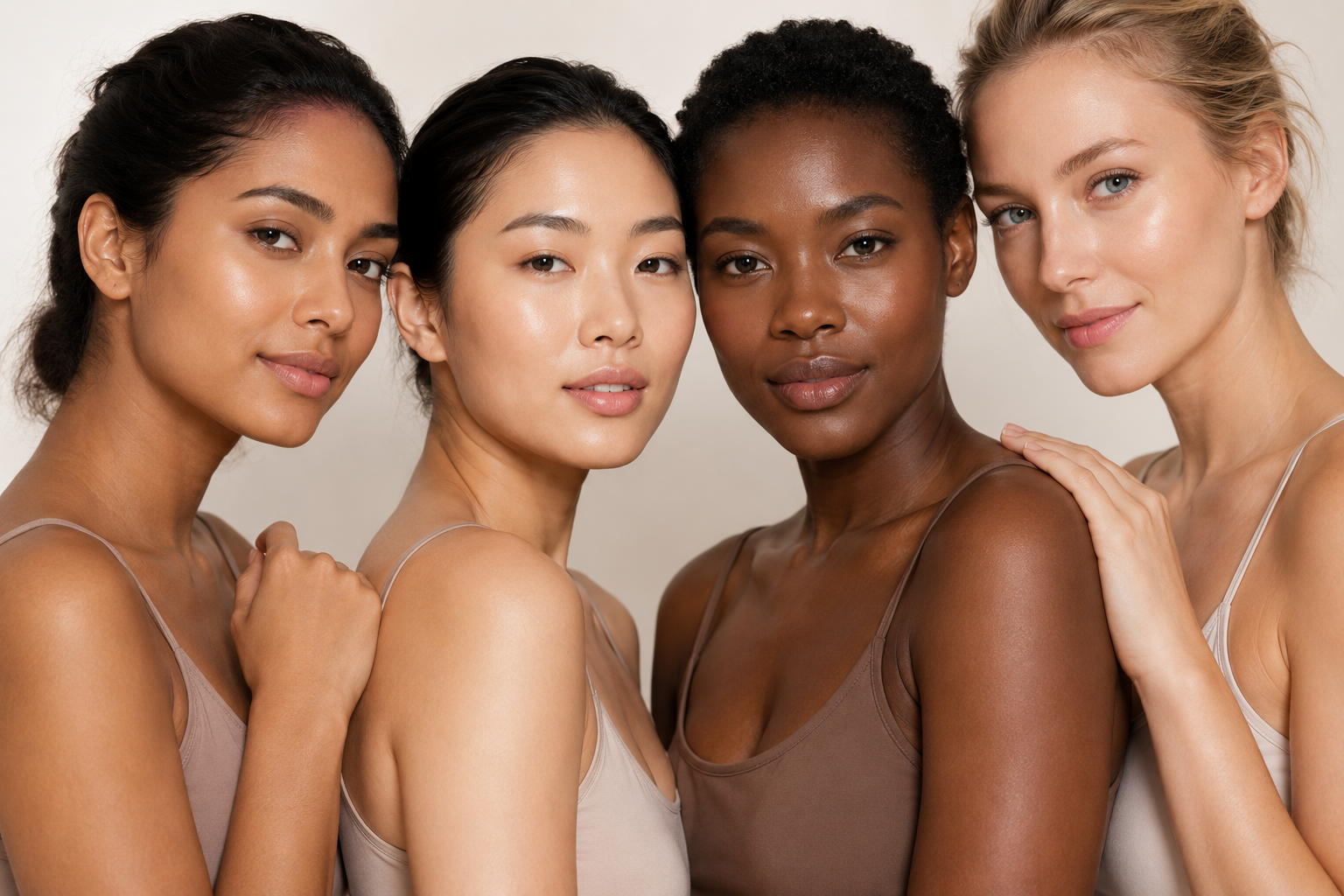
- Skin of color is more likely to develop noticeable and persistent PIH after inflammation.
- Photoprotection is a core treatment category because ultraviolet and visible light can worsen pigment disorders.
- Topical human evidence is strongest for hydroquinone-based regimens, triple-combination therapy, azelaic acid, retinoids, and selected adjunctive ingredients.
- Procedures such as peels and lasers have been studied, but inflammation-related worsening is an important limitation.
- Supplement evidence is limited mainly to melasma or skin-pigmentation studies of Polypodium leucotomos, procyanidin-containing preparations, and glutathione.
- The FDA warns that some skin-lightening products contain unsafe mercury or hydroquinone, and no legally marketed OTC skin-lightening drug products exist in the United States.
What It Is (Clinical Definition & Classification)
Hyperpigmentation means increased skin darkness due to excess melanin in the epidermis, pigment in the dermis, abnormal pigment production, or pigment deposition from medications or other sources.
Common clinical categories include melasma, post-inflammatory hyperpigmentation, solar lentigines, drug-induced pigmentation, and pigment changes after trauma or dermatologic procedures. Melasma often has a symmetric facial pattern, while PIH usually appears where inflammation or injury previously occurred.
Why It Happens (Causes & Risk Factors)
Hyperpigmentation can be triggered or worsened by ultraviolet light, visible light, acne, eczema, friction, burns, irritation, procedures, pregnancy-related hormonal changes, hormonal medications, photosensitizing drugs, and genetic susceptibility.
PIH is more common and may last longer in darker skin phototypes because inflammation can stimulate melanocytes and leave more visible pigment change. Melasma is often chronic and relapsing, especially when light exposure and hormonal factors remain active.
Mechanisms / Pathophysiology
In simple terms, hyperpigmentation happens when pigment-producing cells become overactive, when pigment is transferred more visibly into skin cells, or when inflammation leaves pigment behind as the skin heals. Light exposure, irritation, and inflammation can amplify these processes.
At a technical level, mechanisms may include melanocyte activation, increased tyrosinase activity, altered melanosome transfer, oxidative stress, inflammatory signaling, dermal melanophages, vascular changes, and barrier disruption. The mix of mechanisms differs between melasma, PIH, and drug-related pigmentation.
Symptoms, Patterns, and Differential Clues
Hyperpigmentation usually appears as flat tan, brown, gray-brown, blue-gray, or dark patches or spots. Melasma tends to be symmetric on the face, while PIH often follows the shape or location of a prior acne lesion, rash, bite, burn, irritation, or procedure.
Conditions that may resemble hyperpigmentation include lentigines, moles, medication pigmentation, acanthosis nigricans, fungal or inflammatory rashes, birthmarks, and other pigmentary disorders. Clinical context is important because different causes can require different evaluation categories.
Evaluation & Diagnosis (Clinical Context)
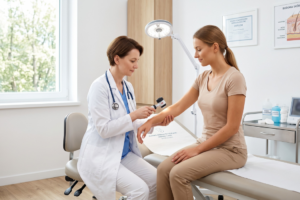
Clinical evaluation typically considers the pigment pattern, distribution, timing, prior inflammation, medication history, pregnancy or hormonal context, skin type, and light exposure. In some cases, dermatology assessment may include Wood lamp examination, dermoscopy, or biopsy when the cause is uncertain.
Evaluation is also used to separate melasma and PIH from other causes of skin darkening, including medication pigmentation or lesions that are not primarily pigment-overproduction disorders.
Treatment Options Snapshot (Evidence-Graded, Descriptive Only)
Standard Medical Care (Guidelines)
- Photoprotection — Sunscreen and light-protection strategies are central in melasma and PIH research because ultraviolet and visible light can worsen pigmentation. Outcomes include relapse prevention and pigment-severity measures, but protection alone may not clear established pigment. Evidence: Strong.
- Trigger and inflammation control — PIH treatment literature emphasizes addressing acne, eczema, irritation, or other inflammatory drivers. Outcomes include reduced new pigment formation, but established pigmentation may persist after inflammation improves. Evidence: Moderate.
- Clinical subtype classification — Distinguishing melasma, PIH, drug pigmentation, lentigines, and other causes is a standard clinical context. Outcomes include diagnostic accuracy and treatment selection, but classification does not itself remove pigment. Evidence: Moderate.
- Relapse-aware maintenance context — Melasma research describes recurrence as common after improvement. Outcomes include recurrence or severity scores, but long-term control varies across studies. Evidence: Moderate.
- Avoidance of unsafe skin-lightening products — FDA safety communications describe risks from mercury-containing or illegally marketed hydroquinone-containing products. Outcomes include regulatory safety findings, not pigment improvement. Evidence: Strong.
Prescription / Medical Therapies
- Hydroquinone-containing therapy — Hydroquinone is one of the most studied topical depigmenting therapies in melasma and PIH literature. Outcomes include visible pigment change and MASI score change, but irritation, relapse, and regulatory status limit broad use. Evidence: Strong.
- Triple-combination therapy — Triple-combination topical therapy is strongly represented in melasma treatment reviews. Outcomes include melasma severity score improvement, but adverse irritation and medical-supervision context are important limitations. Evidence: Strong.
- Azelaic acid — Azelaic acid has been evaluated in melasma, including comparison with hydroquinone. Outcomes include MASI score change, but results depend on study design, concentration, comparator, and follow-up. Evidence: Moderate.
- Topical retinoids — Retinoids have been studied in acne-associated PIH and pigmentary disorders. Outcomes include hyperpigmentation measures and acne-related lesion context, but irritation can be a limiting factor. Evidence: Moderate.
- Tranexamic acid in medical context — Tranexamic acid has been studied for melasma in topical and systemic forms. Outcomes include MASI score change, but systemic use is not a cosmetic supplement category and has medical-risk considerations. Evidence: Moderate.
Procedures / Devices / Technologies
- Chemical peels — Superficial chemical peels have been studied for melasma and PIH, often as adjunctive therapy. Outcomes include MASI score or pigment-score change, but irritation and rebound PIH are important limitations. Evidence: Moderate.
- Laser and light-based procedures — Lasers and light devices have been studied for selected pigment disorders and refractory melasma. Outcomes include pigment-score change, but PIH risk varies by skin type, device, and protocol. Evidence: Limited-Mixed.
- Microneedling-assisted topical delivery — Microneedling has been evaluated as an adjunctive delivery method in melasma studies. Outcomes include MASI score change, but evidence is procedure-specific and not uniform across protocols. Evidence: Limited-Mixed.
- Superficial resurfacing approaches — Resurfacing methods target epidermal pigment and texture in selected settings. Outcomes include pigment-severity measures, but procedure-related inflammation can worsen PIH. Evidence: Limited-Mixed.
- Combination procedural approaches — Combination regimens are common in melasma research because pigment formation has multiple drivers. Outcomes include MASI score and quality-of-life measures, but attribution to a single procedure is often limited. Evidence: Limited-Mixed.
Supplements / Vitamins (Research Context Only)
Available direct human supplement evidence was more limited than the evidence available for standard medical treatment categories in this condition.
Tier A (Strong / Moderate Evidence)
- Polypodium leucotomos extract — Oral Polypodium leucotomos has been studied as an adjunct in melasma alongside sunscreen or topical therapy. Trials reported changes in MASI score or pigmentation measures, but the evidence applies to adjunctive melasma contexts and not to all hyperpigmentation patterns. Evidence: Moderate.
Tier B (Limited-Mixed Evidence)
- French maritime pine bark extract / procyanidins — Oral pine bark extract and related proanthocyanidin preparations have been studied in melasma or chloasma populations. Studies reported changes in MASI score or pigmentation measures, but findings are formulation-specific and not separable from all extract components. Evidence: Limited-Mixed.
- Procyanidin plus vitamins A, C, and E — A randomized trial studied a combined oral antioxidant preparation in epidermal melasma. The measurable outcome was melasma-severity change, but the evidence cannot attribute effects to any individual vitamin and is limited to the combination context. Evidence: Limited-Mixed.
Tier C (Emerging Evidence)
- Glutathione — Oral glutathione has been studied in human pigmentation trials measuring skin color rather than consistently diagnosis-specific melasma or PIH outcomes. Trials reported melanin index changes, but the evidence is short-term and not strong enough to generalize to hyperpigmentation treatment. Evidence: Emerging.
Topical / Cosmetic Ingredients (Research Context Only)
- Hydroquinone — Topical hydroquinone has extensive human evidence in melasma and PIH treatment literature. Outcomes include visible pigment improvement and MASI score change, but irritation, relapse, ochronosis concern, and regulatory restrictions limit generalization. Evidence: Strong.
- Triple-combination therapy — Triple-combination topical therapy has been studied in melasma as a combined depigmenting, retinoid, and anti-inflammatory approach. Outcomes include melasma severity score improvement, but adverse irritation and medical-supervision context are key limitations. Evidence: Strong.
- Azelaic acid — Topical azelaic acid has been compared with hydroquinone in melasma studies and meta-analysis. Outcomes include MASI score change, but concentration, comparator choice, and follow-up duration vary across studies. Evidence: Moderate.
- Topical retinoids — Retinoids have been studied for acne-associated PIH and pigmentary disorders. Outcomes include hyperpigmentation measures and acne-lesion context, but irritation may worsen PIH in susceptible skin. Evidence: Moderate.
- Topical tranexamic acid — Topical tranexamic acid has been studied and reviewed in melasma treatment literature. Outcomes include MASI score change, but evidence varies by formulation, comparator, and whether it is used alone or in combination. Evidence: Limited-Mixed.
- Kojic acid — Kojic acid has been studied as an adjunct depigmenting ingredient in melasma and PIH literature. Outcomes include pigment-score changes, but irritation risk and combination-product designs limit attribution. Evidence: Limited-Mixed.
- Topical vitamin C derivatives — Ascorbic acid derivatives have been evaluated as topical adjuncts in melasma. Outcomes include pigment or MASI score change, but formulation stability and ingredient combinations limit broad conclusions. Evidence: Limited-Mixed.
- Niacinamide — Topical niacinamide has been reviewed among melasma and facial hyperpigmentation treatments. Outcomes include pigment-severity changes, but evidence is smaller and often comparator- or combination-dependent. Evidence: Limited-Mixed.
- Glycolic acid / superficial peel acids — Glycolic acid and related superficial peel acids have been studied in melasma protocols. Outcomes include MASI score change, but irritation, barrier disruption, and rebound PIH are important limitations. Evidence: Limited-Mixed.
- Cysteamine — Topical cysteamine appears in melasma antioxidant and topical therapy reviews. Outcomes include melasma-severity measures, but evidence remains formulation-specific and less extensive than hydroquinone-based therapy. Evidence: Emerging.
Dietary Sources (Research Context Only)
No dietary sources met strict human-evidence inclusion criteria for this condition. Direct human dietary-source evidence was narrower than the target item count.
What Research Has Studied
- Melasma Area and Severity Index outcomes.
- Modified MASI and pigment-severity scales.
- Melanin index and colorimetry.
- Quality-of-life measures in melasma studies.
- Relapse and recurrence after therapy.
- Irritation, erythema, and procedure-triggered PIH.
- Comparative topical outcomes such as azelaic acid versus hydroquinone.
- Photoprotection and visible-light protection in melasma and PIH.
Safety, Interactions & Regulatory Context
Hyperpigmentation treatments can cause irritation, dryness, redness, contact dermatitis, relapse, paradoxical darkening, or procedure-triggered PIH. These risks are especially relevant when inflammation is part of the pigment pathway or when skin is prone to PIH.
The FDA warns that some skin-lightening products contain mercury and/or hydroquinone and states that there are no FDA-approved or legally marketed OTC skin-lightening drug products in the United States.
Oral agents studied for melasma or pigmentation should not be treated as general cosmetic supplements simply because they are available in oral form. Some systemic therapies, such as tranexamic acid, belong to medical-therapy categories rather than supplement categories.
Evidence Overview
The best-supported research areas for hyperpigmentation involve melasma and PIH, especially photoprotection, topical depigmenting therapies, combination therapy, retinoids, azelaic acid, and dermatologist-directed procedures.
Melasma evidence is stronger than evidence for many other hyperpigmentation subtypes because it has repeated trials, severity scales, and comparative treatment studies. PIH evidence is clinically important but often depends on the underlying inflammatory trigger, skin type, and procedure or topical exposure.
Supplement evidence is much narrower. Polypodium leucotomos has randomized adjunctive melasma trials, procyanidin-containing preparations have small human melasma or chloasma studies, and glutathione studies more often measure melanin index or skin-lightening outcomes rather than diagnosis-specific hyperpigmentation endpoints.
Dietary-source evidence did not meet strict direct human treatment criteria. Nutrient mechanisms, antioxidant content, or general skin-health claims were not counted as evidence that a food source changes melasma, PIH, or hyperpigmentation severity.
Evidence Confidence Classification
Overall Rating: Moderate.
The overall evidence base is moderate because standard topical and dermatology-directed treatment categories have repeated human evidence, while supplement evidence is smaller, subtype-specific, and formulation-dependent. Direct dietary-source evidence for treatment claims was insufficient under the screening criteria.
What Does Not (Evidence Gaps)
- Coconut oil — No qualifying human evidence was identified for meaningful melasma or PIH pigment-score improvement. Moisturizing or barrier effects would not equal evidence of hyperpigmentation treatment.
- Lemon juice or citrus application — No qualifying human evidence supports treatment of hyperpigmentation, and irritation is a relevant limitation in PIH-prone skin.
- Baking soda scrubs — No qualifying human evidence supports pigment-score improvement, and abrasive irritation may be counterproductive in inflammation-linked pigmentation.
- Collagen supplements — No direct human hyperpigmentation outcome evidence met inclusion criteria in this review.
- Biotin — No direct human evidence supports melasma or PIH pigment improvement.
FAQ
1. Is hyperpigmentation one condition?
No. Hyperpigmentation is a descriptive term for darker skin areas and can come from several causes, including melasma, PIH, sun damage, medication effects, or other disorders.
2. What is melasma?
Melasma is an acquired pigmentary disorder that often causes symmetric brown or gray-brown patches, especially on the face. It is commonly linked with light exposure, hormonal factors, and recurrence.
3. What is post-inflammatory hyperpigmentation?
PIH is darker pigmentation that appears after inflammation or injury, such as acne, eczema, irritation, burns, or procedures.
4. Why do acne spots sometimes stay dark?
Inflamed acne can stimulate pigment production and pigment transfer. After the acne lesion settles, pigment may remain visible as PIH.
5. Is hyperpigmentation dangerous?
Many forms are benign, but similar-looking skin changes can have different causes. Clinical evaluation helps distinguish common pigment disorders from other diagnoses.
6. Does sunlight worsen hyperpigmentation?
Yes, ultraviolet and visible light can worsen melasma and darken existing pigmentation. Photoprotection is a central treatment category in melasma and PIH research.
7. Are darker skin tones more likely to develop PIH?
PIH is more common and often more persistent in skin of color. Inflammation can produce more visible and longer-lasting pigment change.
8. Are over-the-counter skin-lightening products safe?
The FDA warns that some OTC skin-lightening products contain mercury or hydroquinone and states that there are no legally marketed OTC skin-lightening drug products in the United States.
9. Is hydroquinone evidence-based?
Hydroquinone is one of the best-studied topical agents for melasma and PIH. Its use is limited by irritation, relapse, and regulatory/safety context.
10. What is triple-combination therapy?
Triple-combination therapy is a medical topical regimen studied mainly in melasma. It has strong evidence but is not a general cosmetic brightening category.
11. Does azelaic acid have evidence for hyperpigmentation?
Azelaic acid has human evidence in melasma, including studies comparing it with hydroquinone. The main measured outcome is typically MASI or pigment-severity change.
12. Do retinoids help dark marks?
Topical retinoids have evidence in acne-associated PIH and other pigmentary contexts. Irritation is an important limitation because inflammation can worsen PIH.
13. Is tranexamic acid a supplement?
No. Tranexamic acid is a medical therapy studied for melasma in topical and systemic forms, not a dietary supplement category.
14. Do supplements treat hyperpigmentation?
Only a few supplement-type interventions have direct human pigmentation evidence, mostly in melasma or skin-pigmentation trials. The evidence is not broad enough to apply to all hyperpigmentation.
15. Does glutathione have strong evidence?
Glutathione has human studies measuring melanin index or skin pigmentation, but the evidence is short-term and not consistently diagnosis-specific for melasma or PIH.
16. Can diet clear hyperpigmentation?
Direct human dietary-source evidence did not meet strict treatment-claim criteria in this review. Nutrient content or antioxidant mechanisms were not counted as clinical evidence.
17. Can procedures make pigmentation worse?
Procedures may improve selected pigment patterns, but irritation and inflammation can worsen PIH, especially in susceptible skin types.
18. Why does hyperpigmentation come back?
Melasma can relapse because light exposure, hormonal factors, and pigment-cell activity may persist after visible improvement.
Resources
American Academy of Dermatology Melasma Overview — Authority — https://www.aad.org/public/diseases/a-z/melasma-overview
American Academy of Dermatology Melasma Treatment — Authority — https://www.aad.org/public/diseases/a-z/melasma-treatment
Postinflammatory Hyperpigmentation StatPearls — Authority — https://www.ncbi.nlm.nih.gov/books/NBK559150/
Melasma StatPearls — Authority — https://www.ncbi.nlm.nih.gov/books/NBK459271/
Postinflammatory Hyperpigmentation Review — Review — https://pmc.ncbi.nlm.nih.gov/articles/PMC2921758/
Topical Treatments for Melasma Review — Review — https://pmc.ncbi.nlm.nih.gov/articles/PMC9122278/
Azelaic Acid Versus Hydroquinone Meta-analysis — Review — https://pubmed.ncbi.nlm.nih.gov/37457606/
Azelaic Acid Versus Hydroquinone Full Text — Review — https://pmc.ncbi.nlm.nih.gov/articles/PMC10339666/
Topical Retinoids and PIH Review — Review — https://pmc.ncbi.nlm.nih.gov/articles/PMC8776661/
Topical and Systemic Therapies in Melasma — Review — https://pmc.ncbi.nlm.nih.gov/articles/PMC10718129/
Polypodium Leucotomos Melasma Trial — Research — https://pubmed.ncbi.nlm.nih.gov/23740292/
Polypodium Leucotomos Asian Skin Trial — Research — https://pubmed.ncbi.nlm.nih.gov/29606995/
Pine Bark Extract Melasma Study — Research — https://pubmed.ncbi.nlm.nih.gov/32841433/
Pycnogenol Melasma Study — Research — https://pubmed.ncbi.nlm.nih.gov/12237816/
Procyanidin plus Vitamins Trial — Research — https://pubmed.ncbi.nlm.nih.gov/19659873/
Grape Seed Proanthocyanidin Chloasma Study — Research — https://pubmed.ncbi.nlm.nih.gov/15597304/
Oral Glutathione Pigmentation Trial — Research — https://pubmed.ncbi.nlm.nih.gov/20524875/
Systemic Glutathione Trial — Research — https://pmc.ncbi.nlm.nih.gov/articles/PMC7196133/
FDA Mercury and Hydroquinone Warning — FDA — https://www.fda.gov/consumers/health-fraud-scams/fda-warns-consumers-skin-products-containing-mercury-andor-hydroquinone
FDA OTC Skin Lightening Products Communication — FDA — https://www.fda.gov/drugs/drug-safety-communications/fda-works-protect-consumers-potentially-harmful-otc-skin-lightening-products
More from the Medical & Health Conditions Encyclopedia