

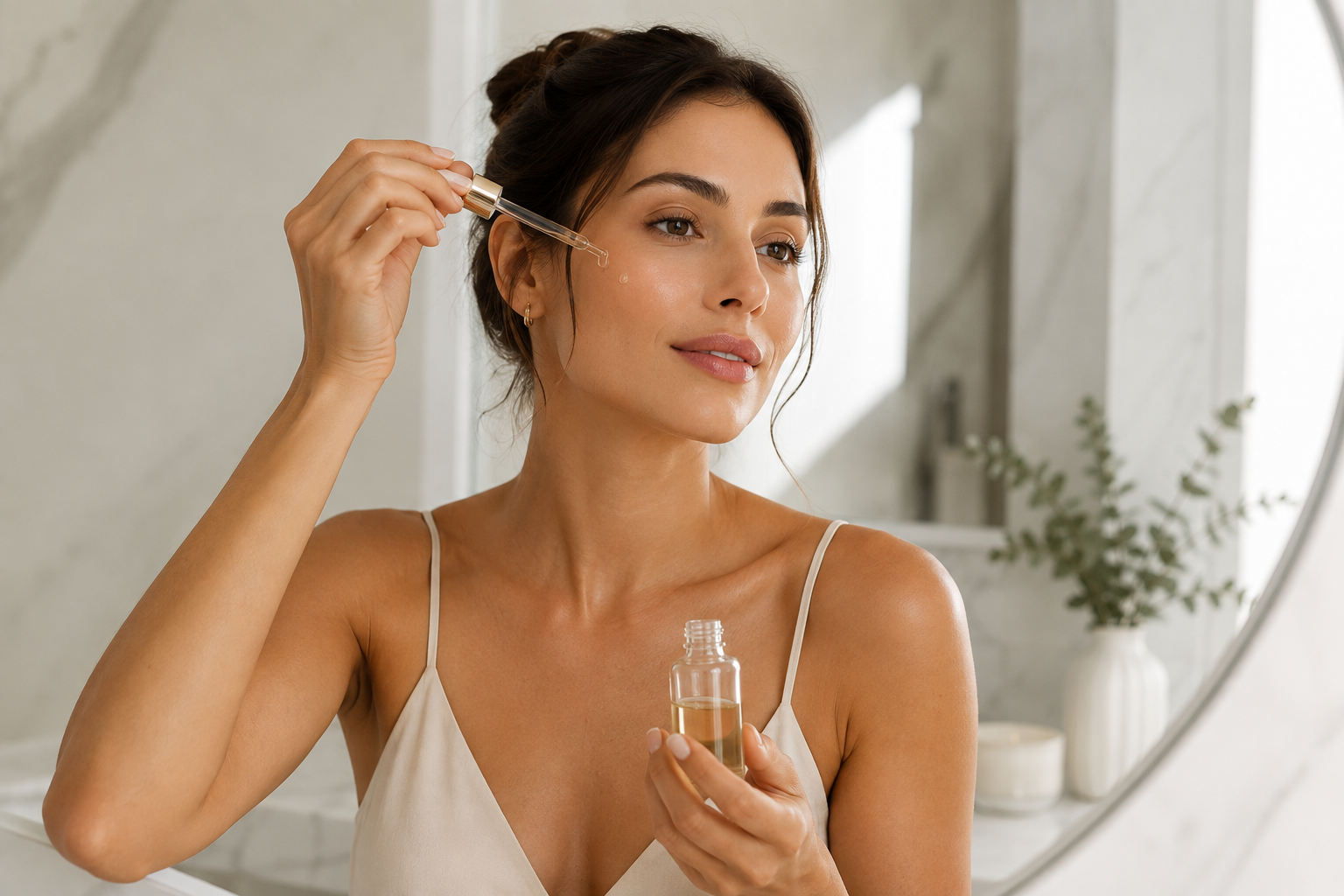
Panthenol is a vitamin B5-related alcohol that can be converted into pantothenic acid, while dexpanthenol is the D-form of panthenol commonly studied in topical skin, eye, nasal, and wound-care research. (Review) (Review)
Human research on panthenol and dexpanthenol is strongest for topical skin hydration, skin-barrier measurements, irritation models, and wound-care settings. (Research) (Research) Oral vitamin B5 research is a related but separate evidence area because most oral studies use pantothenic acid, calcium pantothenate, pantethine, or coenzyme A-related compounds rather than topical panthenol. (NIH ODS) The overall evidence is moderate for topical skin-barrier outcomes and more limited or form-specific for oral, nasal, eye, acne, and radiodermatitis outcomes. (Research) (Research)
Ingredient Identity
- Official name(s): Panthenol; dexpanthenol; D-panthenol; pantothenyl alcohol. (Review)
- Vitamin relationship: Panthenol is related to pantothenic acid, also known as vitamin B5. (Review)
- Key distinction: Panthenol is the broader ingredient term, while dexpanthenol refers to the D-form used in many clinical and cosmetic studies. (Review)
- Classification: Vitamin B5-related alcohol and cosmetic skin-conditioning ingredient. (Review)
- Related oral forms: Pantothenic acid, calcium pantothenate, pantethine, and coenzyme A-related preparations. (NIH ODS)
- Endogenous vs exogenous: Pantothenic acid participates in normal human metabolism, while panthenol and dexpanthenol are commonly used as topical or supplemental ingredient forms. (Review)
- CAS number: This article covers several related vitamin B5 forms rather than one single CAS-defined substance. (Review)
Ingredient Snapshot
- Classification: Panthenol/dexpanthenol is a vitamin B5-related alcohol used in topical skin, eye, and nasal formulations. (Review)
- Endogenous vs exogenous status: Pantothenic acid is used inside the body to form coenzyme A, while panthenol and dexpanthenol are usually studied as applied or supplemental forms. (Review)
- Primary human research domains: Human studies have examined skin hydration, skin-barrier recovery, irritation, wound healing, radiodermatitis, dry eye, nasal symptoms, postoperative throat recovery, acne supplements, and lipid markers. (Research) (Research)
- Common study formats: The evidence includes randomized topical trials, skin-irritation models, intra-individual comparison studies, ophthalmic studies, nasal combination-product trials, and oral supplement studies. (Research) (Research)
- Pharmacokinetic characterization status: Oral pantothenic acid intake and urinary excretion have been described in nutrition research, but consumer-style topical panthenol pharmacokinetics are less standardized across formulas. (Review)
- Regulatory context in the United States: FDA lists pantothenic acid with a Daily Value of 5 mg for Nutrition Facts and Supplement Facts labeling. (FDA)
- Regulatory context in the European Union: EFSA has issued dietary reference values for pantothenic acid. (EFSA)
- Evidence maturity: The human evidence is most mature for topical skin-barrier and wound-care measurements, while oral evidence depends strongly on the specific vitamin B5-related compound studied. (Research) (NIH ODS)
Introduction
Panthenol is a vitamin B5-related ingredient that can be converted into pantothenic acid. (Review) Pantothenic acid is required for coenzyme A, a molecule that helps cells process fats and energy-containing nutrients. (Review) Dexpanthenol is the D-form of panthenol and is commonly used in topical dermatology and cosmetic research. (Review)
People often look up panthenol because it appears in moisturizers, barrier creams, ointments, eye drops, nasal sprays, and oral vitamin B5-related products. (Review) Human research has studied topical dexpanthenol for skin hydration, skin-barrier recovery, irritation, wound healing, radiodermatitis, and mucosal-surface care, while oral research has focused on pantothenic acid intake, acne supplements, pantethine, and lipid markers. (Research) (Research)
This article is informational only, describes panthenol/dexpanthenol as a biochemical ingredient studied in human research, and does not provide medical or dosing advice. (Review)
Quick Summary
- Panthenol is a vitamin B5-related alcohol, and dexpanthenol is the D-form commonly used in topical human studies. (Review)
- The strongest human evidence for panthenol/dexpanthenol is in Beauty and Skin Health, especially hydration, skin-barrier measurements, irritation models, and wound-care settings. (Research) (Research)
- Topical skin studies often measure transepidermal water loss, which means water escaping through the skin barrier. (Research)
- Oral vitamin B5 research is related but not interchangeable with topical panthenol research because oral studies often use pantothenic acid, calcium pantothenate, pantethine, or coenzyme A-related forms. (NIH ODS)
- Radiodermatitis evidence is mixed because some studies reported limited benefit while another trial found no clinically important advantage versus no cream. (Research) (Research)
- Eye and nasal studies are formulation-specific because they involve artificial tears or nasal combinations rather than ordinary facial moisturizers. (Research) (Research)
- A cosmetic safety assessment concluded that panthenol, pantothenic acid, and related cosmetic ingredients are safe in cosmetics under reported use practices and concentrations. (Review)
Human Research Findings by Condition
Beauty and Skin Health
Human research on Beauty and Skin Health is the most developed area for topical panthenol and dexpanthenol. (Research) Studies have measured hydration, transepidermal water loss, irritation response, wound closure, diaper dermatitis, atopic dermatitis maintenance, and radiodermatitis outcomes. (Research) Transepidermal water loss means water escaping through the skin surface, and it is commonly used as a skin-barrier measurement. (Research)
Key human study
Dose studied: Topical dexpanthenol in lipophilic formulations
Population: Human volunteers
Duration: 7 days
Researchers measured skin hydration and transepidermal water loss after topical dexpanthenol use. (Research) The study reported improved outer-skin hydration and reduced water loss compared with vehicle; the outer layer of skin is also called the stratum corneum. (Research)
Result: Randomized human trial reported a statistically significant improvement
Evidence strength: Moderate
Study source: (Research)
Additional human study
Dose studied: 5% dexpanthenol hand balm, applied twice daily
Population: 25 healthy adults
Duration: 26 days, including sodium lauryl sulfate irritation exposure
Researchers studied whether a 5% dexpanthenol hand balm protected skin from sodium lauryl sulfate, a cleansing-agent irritant used in controlled skin-barrier studies. (Research) This trial is relevant to dry, irritated, or over-washed skin questions, but it tested a controlled irritation model rather than every consumer moisturizer. (Research)
Result: Randomized human trial reported a statistically significant improvement
Evidence strength: Moderate
Study source: (Research)
Additional human study
Dose studied: Dexpanthenol-containing ointment under occlusive wound care
Population: 38 patients after ablative fractional CO₂ laser treatment
Duration: 14-day follow-up, with 7 days of occlusive care
Researchers compared a dexpanthenol-containing ointment with petroleum jelly after laser-induced skin wounds. (Research) The dexpanthenol group had faster early wound closure and improved early re-epithelialization, which means faster rebuilding of the surface skin layer. (Research)
Result: Randomized human trial reported a statistically significant improvement
Evidence strength: Moderate
Study source: (Research)
Additional human study
Dose studied: 0.5% dexpanthenol emollient
Population: Breast cancer patients receiving radiotherapy
Duration: During radiotherapy and two weeks after radiotherapy ended
Researchers compared a 0.5% dexpanthenol emollient, topical methylprednisolone aceponate, and no treatment for acute radiation dermatitis. (Research) Dexpanthenol appeared to lessen dermatitis progression compared with no treatment, but it did not prevent radiodermatitis and performed less strongly than the topical corticosteroid comparator. (Research)
Result: Human clinical studies reported mixed findings
Evidence strength: Mixed
Study source: (Research)
Eye Health
Human Eye Health evidence involves topical eye preparations containing dexpanthenol rather than oral vitamin B5. (Research) The main studied outcomes include dry-eye measures, corneal surface healing, and corneal epithelial permeability. (Research) The corneal epithelium is the thin surface layer covering the front of the eye. (Research)
Key human study
Dose studied: Dexpanthenol-containing artificial tears used five times daily
Population: 50 patients with dry eyes
Duration: 6 weeks
Researchers compared artificial tears with and without dexpanthenol in people with dry eyes. (Research) The dexpanthenol-containing preparation improved corneal epithelial permeability-related measures more than the dexpanthenol-free preparation. (Research)
Result: Randomized human trial reported a statistically significant improvement
Evidence strength: Limited
Study source: (Research)
Additional human study
Dose studied: Dexpanthenol-containing ophthalmic treatment after phototherapeutic keratectomy
Population: Patients after phototherapeutic keratectomy
Duration: Corneal healing follow-up
Researchers evaluated whether dexpanthenol affected corneal re-epithelialization after phototherapeutic keratectomy. (Research) The average healing time was slightly shorter in dexpanthenol-treated eyes, but the difference versus placebo was not statistically significant. (Research)
Result: Human clinical study reported no clear effect
Evidence strength: Mixed
Study source: (Research)
Nasal Health
Human Nasal Health studies have evaluated dexpanthenol mainly in nasal sprays or drops combined with decongestants or moisturizing agents. (Research) These studies are relevant to nasal-surface care questions, but many results cannot isolate dexpanthenol from the full combination product. (Research)
Key human study
Dose studied: Xylometazoline nasal spray with 5% dexpanthenol
Population: 152 patients with acute rhinitis
Duration: 5 days
Researchers compared xylometazoline plus dexpanthenol with xylometazoline alone in people with acute rhinitis. (Research) The combination group had higher cure or near-cure rates by days 3–5, but the finding applies to a decongestant-plus-dexpanthenol product rather than dexpanthenol alone. (Research)
Result: Randomized human trial reported a statistically significant improvement
Evidence strength: Moderate
Study source: (Research)
Additional human study
Dose studied: 0.05% oxymetazoline plus 5% dexpanthenol nasal drops
Population: 100 patients with nasal congestion after allergic rhinitis or nasal surgery
Duration: Short-term clinical treatment period
Researchers compared oxymetazoline plus dexpanthenol with xylometazoline drops in patients with nasal congestion. (Research) The combination produced more pronounced symptom relief than the comparator, but the study cannot separate oxymetazoline effects from dexpanthenol effects. (Research)
Result: Human clinical study reported a modest improvement
Evidence strength: Limited
Study source: (Research)
Oral Health
Human Oral Health evidence for dexpanthenol is limited and includes a pediatric tonsillectomy study. (Research) Tonsillectomy evidence concerns postoperative throat pain and wound healing, so it should not be generalized to ordinary oral-care products without direct evidence. (Research)
Key human study
Dose studied: Oral dexpanthenol; dose details are not stated in the PubMed abstract
Population: 120 pediatric tonsillectomy patients
Duration: Postoperative follow-up
Researchers studied oral dexpanthenol after pediatric tonsillectomy and measured throat pain and tonsillar wound healing. (Research) The dexpanthenol groups had less throat pain and better tonsillar wound healing than placebo groups in the study abstract. (Research)
Result: Randomized human trial reported a statistically significant improvement
Evidence strength: Limited
Study source: (Research)
Cardiovascular Health
Human Cardiovascular Health evidence mainly involves oral pantethine or coenzyme A-related compounds, not topical panthenol. (Research) Pantethine is a vitamin B5-related compound that differs from panthenol and has been studied for blood lipid markers such as LDL cholesterol and triglycerides. (Research)
Key human study
Dose studied: Pantethine 600 mg/day for 8 weeks, then 900 mg/day for 8 weeks
Population: 120 adults at low to moderate cardiovascular risk
Duration: 16 weeks
Researchers evaluated oral pantethine alongside dietary counseling in a placebo- and diet-controlled trial. (Research) Pantethine was associated with improvements in total cholesterol, LDL cholesterol, and non-HDL cholesterol compared with placebo in the study report. (Research)
Result: Randomized human trial reported a statistically significant improvement
Evidence strength: Moderate
Study source: (Research)
Additional human study
Dose studied: Pantethine 300 mg three times daily
Population: 29 patients with hyperlipoproteinemia
Duration: 8 weeks
Researchers studied oral pantethine in patients with hyperlipoproteinemia, a condition involving abnormal blood lipoproteins. (Research) Pantethine lowered total cholesterol and LDL-associated cholesterol in patients with type IIB hyperlipoproteinemia, but the study was small. (Research)
Result: Randomized human trial reported a statistically significant improvement
Evidence strength: Limited
Study source: (Research)
Nutrition and Deficiencies
Human Nutrition and Deficiencies evidence comes from pantothenic acid intake studies, depletion-repletion studies, dietary reference reviews, and urinary excretion studies. (Review) A depletion-repletion study lowers intake under controlled conditions and then restores intake while researchers measure biological markers such as urinary excretion. (Review)
Key human study
Dose studied: Controlled dietary intakes of 2.8, 7.8, and 12.8 mg/day pantothenic acid
Population: 8 healthy women aged 18–24
Duration: Controlled intake periods summarized in the Dietary Reference Intake review
Researchers measured urinary pantothenic acid excretion at different controlled dietary intake levels. (Review) Urinary excretion increased as intake increased, supporting urinary excretion as a short-term intake-response marker, although no universally accepted adequacy cutoff was established. (Review)
Result: Human studies observed short-term physiological effects
Evidence strength: Observational
Study source: (Review)
Additional human study
Dose studied: 10 mg/day and 100 mg/day pantothenic acid during repletion
Population: 10 young men after depletion
Duration: Depletion and repletion protocol summarized in the Dietary Reference Intake review
Researchers studied pantothenic acid depletion followed by repletion with 10 mg/day and later 100 mg/day. (Review) Urinary pantothenic acid excretion increased with 10 mg/day and increased further after 100 mg/day, showing that urinary output responds to oral intake. (Review)
Result: Human studies observed short-term physiological effects
Evidence strength: Limited
Study source: (Review)
Dosage & Study Snapshot (Research Context)
Human studies used several exposure types: dietary pantothenic acid, oral vitamin B5-related compounds, topical skin preparations, ophthalmic drops, and nasal combinations. (Review) Oral milligram doses and topical percentage concentrations cannot be directly compared because the route, absorbed amount, and target tissue differ. (Review) Dietary and oral exposures are listed first by milligram amount, followed by topical and local formulations by concentration or application schedule. (Review)
2.8 mg/day dietary pantothenic acid:
A controlled intake study summarized in the Dietary Reference Intake review used 2.8 mg/day as the lowest dietary exposure described in the reviewed human evidence. (Review) The study involved healthy young women and measured urinary pantothenic acid excretion. (Review) Urinary excretion increased when intake rose from 2.8 mg/day to higher controlled intakes. (Review) This finding is relevant to oral vitamin B5 status, not topical skin-care effects. (Review)
Result: Observational association
Evidence strength: Observational
Notes / limitations: This was intake/status evidence rather than a clinical outcomes trial. (Review)
4–7 mg/day usual dietary intake and 5 mg/day U.S. Daily Value:
The Dietary Reference Intake review described usual pantothenic acid intakes of about 4–7 mg/day in small intake studies used to support adequate intake estimates. (Review) FDA lists the Daily Value for pantothenic acid as 5 mg for Nutrition Facts and Supplement Facts labeling. (FDA) EFSA has issued dietary reference values for pantothenic acid in the EU. (EFSA) This dose band describes nutrition reference context rather than a treatment or skin-care dose. (FDA)
Result: Observational association
Evidence strength: Moderate
Notes / limitations: Daily Values and dietary reference values are labeling and public-health reference points, not medical dosing instructions. (FDA)
10 mg/day and 100 mg/day oral pantothenic acid repletion:
A depletion-repletion study summarized in the Dietary Reference Intake review used 10 mg/day and then 100 mg/day pantothenic acid in young men after controlled depletion. (Review) Urinary pantothenic acid excretion increased after 10 mg/day and rose further after 100 mg/day. (Review) The measured outcome was a biomarker response rather than a direct symptom, skin, or lipid outcome. (Review) This evidence helps explain oral vitamin B5 handling but does not establish topical panthenol effects. (Review)
Result: Preliminary signal
Evidence strength: Limited
Notes / limitations: The main outcome was urinary excretion, not a clinical endpoint. (Review)
600–900 mg/day oral pantethine:
A North American trial studied oral pantethine at 600 mg/day for eight weeks followed by 900 mg/day for eight weeks in adults at low to moderate cardiovascular risk. (Research) Pantethine improved total cholesterol, LDL cholesterol, and non-HDL cholesterol compared with placebo in the study report. (Research) A separate small trial used 300 mg three times daily, equal to 900 mg/day, in patients with hyperlipoproteinemia and reported lipid changes. (Research) Pantethine is related to vitamin B5 biology but is not the same ingredient exposure as topical panthenol or dexpanthenol. (NIH ODS)
Result: Statistically significant improvement
Evidence strength: Moderate
Notes / limitations: Pantethine lipid studies should not be used as evidence that topical panthenol changes cardiovascular markers. (Research)
0.5% topical dexpanthenol emollient:
A randomized study in breast cancer radiotherapy patients evaluated a 0.5% dexpanthenol emollient for acute radiation dermatitis. (Research) Radiation dermatitis means skin inflammation caused by radiotherapy exposure. (Research) The study reported that dexpanthenol ameliorated dermatitis progression compared with no treatment, but it did not prevent dermatitis and was less effective than the topical corticosteroid comparator. (Research) This concentration is relevant to a medically supervised radiotherapy skin-care context rather than ordinary cosmetic use. (Research)
Result: Mixed findings
Evidence strength: Mixed
Notes / limitations: Radiotherapy-related skin injury is not the same context as routine dry-skin care. (Research)
5% topical dexpanthenol creams, balms, and ointments:
Several human studies used or evaluated 5% dexpanthenol formulations for skin-barrier, irritation, and diaper-area contexts. (Research) In a hand-balm study, 5% dexpanthenol twice daily was studied in a sodium lauryl sulfate irritation model. (Research) In diaper dermatitis research and real-world infant studies, 5% dexpanthenol-containing ointments were evaluated for irritant diaper dermatitis. (Research) These findings support topical relevance, but product base, body site, and population differ across studies. (Review)
Result: Modest improvement
Evidence strength: Moderate
Notes / limitations: A 5% concentration does not guarantee identical outcomes across formulas because vehicle, occlusion, and skin condition can change results. (Research)
Five-times-daily dexpanthenol-containing artificial tears:
A dry-eye trial used dexpanthenol-containing artificial tears five times daily for six weeks. (Research) The study compared drops with and without dexpanthenol in 50 patients with dry eyes. (Research) The dexpanthenol-containing drops improved corneal epithelial permeability-related measures more than drops without dexpanthenol. (Research) This evidence applies to ophthalmic preparations and should not be treated as evidence for facial moisturizers or oral supplements. (Research)
Result: Statistically significant improvement
Evidence strength: Limited
Notes / limitations: Eye-drop findings depend on the full ophthalmic formulation and dosing schedule. (Research)
5% dexpanthenol in nasal decongestant combinations:
Clinical nasal studies used 5% dexpanthenol combined with decongestants such as xylometazoline or oxymetazoline. (Research) In acute rhinitis, xylometazoline plus dexpanthenol produced higher cure or near-cure rates than xylometazoline alone by days 3–5. (Research) In another nasal congestion trial, oxymetazoline 0.05% plus 5% dexpanthenol produced stronger relief than xylometazoline 0.1% drops. (Research) These findings are combination-product evidence rather than proof that dexpanthenol alone relieves congestion. (Research)
Result: Statistically significant improvement
Evidence strength: Moderate
Notes / limitations: Decongestant ingredients strongly affect nasal-symptom outcomes, so dexpanthenol-specific effects are difficult to isolate. (Research)
Key Takeaways from Human Research
- Human evidence is strongest for topical panthenol/dexpanthenol in skin-barrier and irritation-related settings. (Research)
- Wound-care evidence includes a randomized CO₂ laser study in which dexpanthenol ointment improved early wound closure compared with petroleum jelly. (Research)
- Radiodermatitis findings are mixed because some studies reported limited benefit while another trial found no clinically important benefit versus no cream. (Research) (Research)
- Eye and nasal findings are formulation-specific because the studies used artificial tears or nasal combination products rather than standard facial skin-care products. (Research) (Research)
- Oral vitamin B5 studies should be interpreted by compound because pantothenic acid, pantethine, and coenzyme A-related preparations are not interchangeable with topical panthenol. (NIH ODS)
- Cosmetic safety review evidence supports safety under reported cosmetic-use practices and concentrations, but that does not automatically cover every medical or damaged-skin context. (Review)
Origin & Natural Occurrence
Pantothenic acid is the dietary vitamin B5 form and is used by the body to make coenzyme A. (Review) Coenzyme A is a helper molecule that carries chemical groups during energy and fat metabolism. (Review)
Panthenol is related to pantothenic acid because it can be converted into pantothenic acid. (Review) Dexpanthenol is commonly used in topical products because it is the D-form associated with biological conversion. (Review)
Manufactured panthenol and dexpanthenol appear in cosmetics, ointments, eye products, nasal products, and some medical-style topical preparations. (Review) Oral vitamin B5 products may use pantothenic acid, calcium pantothenate, pantethine, or coenzyme A-related compounds. (NIH ODS)
How It Behaves in the Body
Panthenol can be understood as a vitamin B5-related ingredient that becomes more biologically useful after conversion into pantothenic acid. (Review) Pantothenic acid is then used to form coenzyme A, which helps cells process fats and energy-containing nutrients. (Review)
In skin research, topical dexpanthenol is often evaluated through skin-barrier measurements. (Research) One important measurement is transepidermal water loss, which means water escaping through the skin surface. (Research) Lower transepidermal water loss usually indicates a stronger barrier in that testing context. (Research)
Dexpanthenol has also been studied in wound models where researchers measure re-epithelialization. (Research) Re-epithelialization means rebuilding the surface layer of skin or cornea after injury. (Research) In a human molecular wound-healing study, dexpanthenol-treated injured skin showed wound-healing-related gene-expression changes compared with placebo-treated skin. (Research)
What is well established is that pantothenic acid is part of coenzyme A biology and that topical dexpanthenol has measurable effects in several human skin-barrier and wound-care studies. (Review) What remains less standardized is how different consumer formulas, concentrations, vehicles, and body sites affect real-world outcomes. (Review)
Absorption & Delivery Formats
Oral immediate-release: Oral vitamin B5 evidence usually concerns pantothenic acid, calcium pantothenate, pantethine, or coenzyme A-related preparations rather than panthenol skin-care formulas. (NIH ODS) Controlled intake studies show that urinary pantothenic acid excretion changes with intake, but urinary excretion is a status marker rather than a direct clinical benefit measure. (Review)
Oral extended-release: The reviewed human evidence did not identify extended-release panthenol or pantothenic acid trials suitable for clear article-level conclusions. (NIH ODS)
Sublingual: The reviewed human evidence did not identify sublingual panthenol or dexpanthenol studies for skin, eye, nasal, or oral vitamin B5 outcomes. (NIH ODS)
Topical: Topical dexpanthenol has been studied in creams, balms, emollients, ointments, and postprocedure skin-care contexts. (Research) Vehicle matters because a cream, balm, ointment, or occlusive dressing can change hydration, spread, and skin-barrier conditions. (Review)
Ophthalmic and nasal: Dexpanthenol has been studied in artificial tears and in nasal spray or drop combinations. (Research) Nasal studies commonly combine dexpanthenol with decongestants, which makes ingredient-specific interpretation harder. (Research)
Injectable / IV: The reviewed human evidence did not identify injectable or intravenous panthenol/dexpanthenol studies suitable for consumer ingredient interpretation. (NIH ODS)
Quick Facts at a Glance
Onset reported: Topical skin studies usually measured outcomes over days rather than minutes. (Research) Acute rhinitis combination studies reported symptom differences across several days of treatment. (Research)
Time to peak (Tmax): A precise human Tmax for topical panthenol or dexpanthenol was not established in the reviewed evidence. (Review) Oral pantothenic acid studies reviewed for nutrition purposes focused on intake and urinary excretion rather than a standard plasma Tmax for panthenol products. (Review)
Half-life (t½): A clear human half-life for topical panthenol/dexpanthenol was not identified in the reviewed evidence. (Review) Nutrition reviews describe urinary excretion patterns, but they do not provide a consumer-ready half-life for panthenol skin products. (Review)
Typical duration: Skin-barrier studies ranged from about 7 days to several weeks depending on the model. (Research) Eye and nasal studies also used short-term clinical periods, such as six weeks for dry eye and five days for acute rhinitis. (Research) (Research)
Absorption routes studied: The main human routes were topical skin application, ophthalmic eye drops, nasal sprays or drops, and oral vitamin B5-related forms. (Research) (NIH ODS)
Formulation differences: Topical dexpanthenol studies used different vehicles, including balms, ointments, creams, and emollients. (Research) A greasy ointment, light cream, or occlusive dressing can create different hydration and barrier conditions even when the same ingredient is present. (Review)
Variability drivers: Skin condition, body site, irritant exposure, occlusion, and comparator product can affect how a topical panthenol study should be interpreted. (Research) Nasal evidence also varies because some studies combine dexpanthenol with decongestants. (Research)
Tolerance / adaptation: The reviewed evidence did not show strong human evidence that topical panthenol causes pharmacologic tolerance. (Review) Short-term nasal decongestant combination studies should not be interpreted as tolerance studies for dexpanthenol itself. (Research)
Evidence strength snapshot: Topical skin-barrier evidence is the clearest human evidence area for panthenol/dexpanthenol. (Research) Oral evidence is meaningful but form-specific because pantothenic acid, pantethine, and coenzyme A-related compounds answer different research questions. (Research)
Safety, Interactions & Regulation
The cosmetic safety assessment reviewed panthenol, pantothenic acid, and related cosmetic ingredients and concluded they are safe in cosmetics under current reported practices of use and concentration. (Review) This conclusion applies to the cosmetic-use conditions reviewed by the safety panel and should not be read as proof of safety for every route, dose, medical use, or damaged-skin situation. (Review)
The National Academies Dietary Reference Intake chapter did not establish a Tolerable Upper Intake Level for pantothenic acid because available data were insufficient for a quantitative risk assessment. (Review) The same chapter reported no evidence of toxicity from oral pantothenic acid in the reviewed literature. (Review)
For U.S. nutrition labeling, FDA lists pantothenic acid with a Daily Value of 5 mg. (FDA) FDA’s Substances Added to Food inventory lists calcium pantothenate as a nutrient supplement and identifies the GRAS regulation reference for food use. (FDA)
For EU nutrition context, EFSA published dietary reference values for pantothenic acid. (EFSA) EFSA describes dietary reference values as scientific reference points used for nutrition policy, labeling, and consumer information. (EFSA)
Interaction evidence is limited in the reviewed human literature. (NIH ODS) Nasal combination studies involve active decongestants, so interaction and safety interpretation should focus on the full product rather than dexpanthenol alone. (Research)
Evidence Overview
The overall human evidence for panthenol/dexpanthenol is strongest for topical Beauty and Skin Health, especially hydration, transepidermal water loss, irritation models, and short-term wound-care outcomes. (Research) Evidence is more mixed for radiodermatitis because some trials reported limited benefit while another trial found no clinically important benefit versus no cream. (Research) (Research) Eye and nasal evidence is narrower because those studies often use specific ophthalmic or nasal formulas rather than ordinary topical skin products. (Research) (Research) Confidence is not higher because studies differ in route, concentration, vehicle, comparator, population, and outcome measures. (Review)
The topical literature includes controlled studies in healthy volunteers, irritated-skin models, postprocedure wounds, infant diaper dermatitis, childhood atopic dermatitis maintenance, and radiotherapy-related skin reactions. (Research) (Research) These designs help answer common topical questions about hydration, barrier repair, irritation, and healing support. (Research) The studies do not prove that every panthenol-containing product performs the same way because vehicle and context can change exposure at the target tissue. (Review)
Oral evidence should be separated from topical evidence. (NIH ODS) Dietary pantothenic acid research mainly informs vitamin status, adequate intake, urinary excretion, and nutrition policy. (Review) Pantethine lipid trials and pantothenic-acid-based acne supplement studies provide oral supplement evidence, but they do not directly answer whether topical panthenol improves skin appearance or irritation. (Research) (Research)
Future confidence would be strengthened by larger head-to-head studies that isolate dexpanthenol from the rest of the formulation. (Review) More studies using consistent concentrations, standardized barrier outcomes, acne-specific topical designs, sensitive-skin populations, and longer follow-up would make topical claims easier to interpret. (Review)
Evidence Confidence Classification
Moderate for topical Beauty and Skin Health, but Limited / Mixed overall across all uses is the best classification for panthenol/dexpanthenol because multiple human topical studies exist while oral, nasal, eye, acne, and radiodermatitis findings remain more form-specific or mixed. (Research) (Research)
Topical skin-barrier evidence is moderate because randomized and controlled human studies measured hydration, water loss, irritation response, and wound-care outcomes. (Research) Radiodermatitis evidence remains mixed because trial findings do not consistently show clinically important benefit. (Research) Oral evidence should be classified separately because pantothenic acid, pantethine, and coenzyme A-related compounds are not the same research exposure as topical dexpanthenol. (NIH ODS)
Similar Ingredients & Comparators
Similar supplement-style or topical-context ingredients:
- Pantothenic acid
- Calcium pantothenate
- Pantethine
- Niacinamide
- Glycerin
- Hyaluronic acid
- Allantoin
- Ceramides
- Zinc oxide
- Petrolatum
- Urea
- Colloidal oatmeal
Medical / pharma comparator categories:
- Topical corticosteroids
- Barrier-repair emollients
- Occlusive ointments
- Ophthalmic lubricants
- Nasal decongestants
- Radiation dermatitis skin-care protocols
- Postprocedure wound-care dressings
Combination Context
Dexpanthenol + Zinc Oxide:
Dexpanthenol plus zinc oxide was studied in irritant diaper dermatitis, where zinc oxide provides a barrier-style component and dexpanthenol is included as a skin-conditioning ingredient. (Research) The evidence applies to the full ointment formula and diaper-area context rather than panthenol alone. (Research)
Dexpanthenol + Xylometazoline:
Dexpanthenol plus xylometazoline was studied in acute rhinitis, where xylometazoline acts as a nasal decongestant and dexpanthenol is included for nasal-surface care. (Research) The combination performed better than xylometazoline alone in the reported analysis, but the evidence is specific to short-term nasal spray treatment. (Research)
Dexpanthenol + Oxymetazoline:
Oxymetazoline plus 5% dexpanthenol was studied in patients with nasal congestion after allergic rhinitis or nasal surgery. (Research) The trial reported stronger symptom relief versus xylometazoline drops, but the study tested a combination product rather than dexpanthenol alone. (Research)
Dexpanthenol + Hyaluronic Acid:
A nasal spray containing hyaluronic acid and dexpanthenol was evaluated after nasal surgery. (Research) Hyaluronic acid is a water-binding molecule, so this combination is relevant to mucosal hydration and repair context, but the evidence reflects the combined formula. (Research)
FAQ
What is panthenol?
Panthenol is a vitamin B5-related alcohol used in topical and some related supplement contexts. (Review) It can be converted into pantothenic acid, the vitamin B5 form used in coenzyme A metabolism. (Review) In skin-care ingredient lists, panthenol usually refers to a skin-conditioning ingredient related to vitamin B5. (Review)
What is dexpanthenol?
Dexpanthenol is the D-form of panthenol. (Review) The D-form is the biologically active form linked to conversion into pantothenic acid. (Review) Many clinical studies use the word dexpanthenol when they describe this specific form in topical, eye, nasal, or wound-care formulas. (Research)
Is panthenol the same as vitamin B5?
Panthenol is related to vitamin B5, but it is not exactly the same chemical form as pantothenic acid. (Review) Pantothenic acid is the dietary vitamin form used in coenzyme A metabolism. (Review) Panthenol can be converted into pantothenic acid, which is why it is often described as a vitamin B5-related ingredient. (Review)
What does human research study panthenol for?
Human research studies panthenol/dexpanthenol mainly for Beauty and Skin Health, Eye Health, Nasal Health, Oral Health, Cardiovascular Health, and Nutrition and Deficiencies. (Research) (Research) Topical studies focus on hydration, skin-barrier function, irritation, wound care, radiodermatitis, and diaper dermatitis. (Research) Oral studies usually involve pantothenic acid, pantethine, or coenzyme A-related compounds rather than topical panthenol. (NIH ODS)
What are the best-supported topical uses?
The best-supported topical area is Beauty and Skin Health, especially hydration and skin-barrier measurements. (Research) Human studies show effects on transepidermal water loss, skin hydration, irritation models, and early wound-care outcomes. (Research) Evidence is more mixed for radiodermatitis and more formulation-specific for eye and nasal products. (Research)
Does panthenol hydrate skin?
Topical dexpanthenol has human evidence for skin hydration measures. (Research) In one randomized study, dexpanthenol improved outer-layer skin hydration and reduced transepidermal water loss compared with vehicle. (Research) Product vehicle still matters because creams, balms, ointments, and occlusive formulas can perform differently. (Review)
Does panthenol repair the skin barrier?
Topical dexpanthenol has been studied for skin-barrier recovery in controlled human settings. (Research) Skin-barrier repair is usually measured through water loss, hydration, roughness, or irritation-response outcomes. (Research) The evidence is clearest when researchers measure barrier outcomes directly rather than relying on broad cosmetic claims. (Research)
Is panthenol good for sensitive or irritated skin?
Panthenol/dexpanthenol has been studied in irritation models that are relevant to sensitive-skin questions. (Research) One trial used sodium lauryl sulfate, a controlled irritant, to test a 5% dexpanthenol hand balm. (Research) The evidence supports barrier and irritation-related research context, but tolerability can still depend on the full formula. (Review)
Is panthenol good for dry skin?
Topical dexpanthenol has been studied for dry-skin-relevant outcomes such as hydration and transepidermal water loss. (Research) Transepidermal water loss measures how much water escapes through the skin surface. (Research) A formula’s base can influence how dry-skin outcomes appear because ointments, creams, and balms differ in occlusion and texture. (Review)
Is panthenol good for acne-prone skin?
The human acne evidence reviewed here involves an oral pantothenic-acid-based supplement rather than a topical panthenol formula. (Research) That study cannot be used as direct evidence that topical panthenol treats acne. (Research) The available evidence does not establish topical panthenol as an acne treatment. (Research)
Does panthenol clog pores?
The reviewed human evidence does not identify a direct comedogenicity trial showing that panthenol itself clogs pores. (Review) Comedogenicity means a substance’s tendency to contribute to clogged pores. (Review) In real products, pore-related experience can depend on the full formula, including oils, waxes, occlusives, and texture. (Review)
Can panthenol help a damaged skin barrier from over-cleansing?
Controlled irritation studies make panthenol relevant to over-cleansing questions because they test barrier disruption under controlled conditions. (Research) A 5% dexpanthenol hand balm was studied in a sodium lauryl sulfate irritation model. (Research) Real-world outcomes may differ because over-cleansing can involve different cleansers, frequency, skin types, and product formulas. (Review)
Is panthenol useful after cosmetic procedures?
Dexpanthenol has been studied after ablative fractional CO₂ laser treatment. (Research) In that randomized trial, a dexpanthenol-containing ointment improved early wound closure and re-epithelialization compared with petroleum jelly. (Research) This evidence applies to a specific post-laser wound-care setting rather than every procedure or every aftercare product. (Research)
Is panthenol useful for eczema or atopic dermatitis?
Panthenol-containing emollients have been studied in atopic dermatitis maintenance care. (Research) A review summarized dexpanthenol evidence for atopic dermatitis and skin-barrier support. (Review) These data support a barrier-care research context, but they do not show that panthenol replaces prescribed therapy. (Review)
Is panthenol useful for lips?
The reviewed human studies support topical skin-barrier and hydration measures, but they do not provide a dedicated clinical trial on lip products. (Research) Lip products can differ from facial creams because the lip surface and formula base differ. (Review) Claims about lip-specific performance should therefore be treated as formula-specific unless directly studied. (Review)
Is panthenol useful for burns or radiation-related skin irritation?
Panthenol/dexpanthenol has been studied in radiodermatitis, which is skin inflammation related to radiation exposure. (Research) One randomized study found that 0.5% dexpanthenol ameliorated dermatitis progression compared with no treatment but did not prevent radiodermatitis and was less effective than a topical corticosteroid comparator. (Research) Another radiotherapy study found no clinically important benefit of Bepanthen cream versus no cream. (Research)
Is 5% panthenol better than lower concentrations?
Human evidence includes several 5% dexpanthenol topical or nasal formulations, but it does not establish 5% as a universal best concentration. (Research) A 0.5% dexpanthenol emollient was also studied in radiodermatitis, with mixed findings. (Research) Concentration comparisons are difficult because vehicle, skin condition, comparator, and outcome differ across studies. (Review)
Can panthenol be used with retinoids or exfoliating acids?
The reviewed human studies do not provide direct clinical evidence on panthenol combined with retinoids or exfoliating acids. (Research) Retinoid or acid-related irritation is not the same study model as sodium lauryl sulfate irritation. (Research) Evidence for panthenol in barrier and irritation models should not be overstated as proof for every active-ingredient combination. (Review)
How quickly does topical panthenol act?
Human topical studies generally measured outcomes over days rather than minutes. (Research) A skin hydration study evaluated outcomes after seven days. (Research) A post-laser wound study followed wound closure over a 14-day follow-up period. (Research)
What affects absorption and variability?
Formulation affects panthenol interpretation because creams, balms, ointments, eye drops, and nasal sprays expose tissues differently. (Review) Skin condition also matters because intact skin, irritated skin, diaper dermatitis, radiodermatitis, and post-laser wounds are different test settings. (Research) Combination products make interpretation harder because the result may reflect more than dexpanthenol alone. (Research)
Is tolerance reported?
The reviewed human evidence does not show strong evidence that topical panthenol causes pharmacologic tolerance. (Review) Tolerance means a substance has less effect after repeated exposure. (Review) Nasal decongestant combination studies should not be treated as dexpanthenol tolerance studies because decongestants have their own safety considerations. (Research)
Why do studies disagree?
Studies can disagree because they use different panthenol forms, concentrations, vehicles, populations, and outcomes. (Review) A wound ointment study, a radiodermatitis study, a dry-eye study, and a nasal spray study test different exposure contexts. (Research) (Research) Evidence for one route or formula should not be automatically applied to another route or formula. (NIH ODS)
What ingredients is panthenol commonly combined with and why?
Human studies include combinations such as dexpanthenol with zinc oxide, xylometazoline, oxymetazoline, and hyaluronic acid. (Research) (Research) These combinations were studied for diaper dermatitis, nasal congestion or rhinitis, and postoperative nasal mucosa care. (Research) Combination evidence should be interpreted as evidence for the full formula, not panthenol alone. (Research)
What foods naturally contain vitamin B5?
Pantothenic acid is the dietary vitamin B5 form found in foods. (Review) The Dietary Reference Intake review summarizes pantothenic acid intake and status evidence rather than treating panthenol as a food ingredient. (Review) Food vitamin B5 evidence should be separated from topical panthenol or dexpanthenol evidence. (NIH ODS)
How is panthenol or vitamin B5 regulated?
For U.S. nutrition labeling, FDA lists pantothenic acid with a Daily Value of 5 mg. (FDA) FDA’s Substances Added to Food inventory lists calcium pantothenate as a nutrient supplement and identifies the GRAS regulation reference for food use. (FDA) EFSA has issued dietary reference values for pantothenic acid in the European Union. (EFSA)
Resources
Gehring & Gloor topical dexpanthenol hydration study — PubMed — https://pubmed.ncbi.nlm.nih.gov/10965426/
Frosch et al. 5% dexpanthenol irritation study — PubMed — https://pubmed.ncbi.nlm.nih.gov/14641355/
Heise et al. CO₂ laser wound-healing study — PubMed — https://pubmed.ncbi.nlm.nih.gov/30897983/
Schmuth et al. radiodermatitis study — PubMed — https://pubmed.ncbi.nlm.nih.gov/12072066/
Xylometazoline plus dexpanthenol acute rhinitis study — PMC — https://pmc.ncbi.nlm.nih.gov/articles/PMC5565656/
Pantothenic acid Dietary Reference Intake chapter — NCBI Bookshelf — https://www.ncbi.nlm.nih.gov/books/NBK114311/
NIH ODS Pantothenic Acid Fact Sheet — NIH ODS — https://ods.od.nih.gov/factsheets/PantothenicAcid-HealthProfessional/
FDA Daily Value for pantothenic acid — FDA — https://www.fda.gov/food/nutrition-facts-label/daily-value-nutrition-and-supplement-facts-labels
FDA calcium pantothenate food substance inventory — FDA — https://hfpappexternal.fda.gov/scripts/fdcc/index.cfm?id=CALCIUMPANTOTHENATE&set=FoodSubstances
EFSA Dietary Reference Values for pantothenic acid — EFSA — https://www.efsa.europa.eu/en/efsajournal/pub/3581
Cosmetic Ingredient Review safety assessment — International Journal of Toxicology — https://journals.sagepub.com/doi/abs/10.1177/10915818221124809
More from the Supplement Ingredients & Medical Ingredients Encyclopedia