

Introduction
Butyrate is a short-chain fatty acid produced naturally when intestinal microorganisms ferment certain carbohydrates that reach the colon. Sodium butyrate is the sodium salt of butyric acid and is used in research and supplement formulations as a direct source of butyrate. Butyrate has several biological actions, including inhibition of histone deacetylases and activation of metabolite-sensing cell receptors.
Histone deacetylases, usually abbreviated HDACs, are enzymes that remove acetyl chemical groups from histones and many other proteins. Histones are proteins around which DNA is packaged. Because histone acetylation influences chromatin and gene regulation, butyrate has a genuine epigenetic mechanism. It is nevertheless a broad regulator rather than a precision editor aimed at one ageing-associated gene or DNA site.
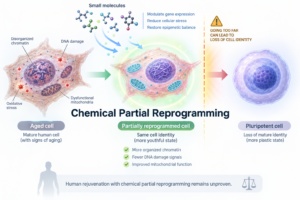
Sodium butyrate also appears in highly visible chemical-reprogramming research associated with David Sinclair and colleagues. In that work, butyrate was investigated as part of a multi-compound cultured-cell system intended to alter age-associated cellular measurements. The experiment did not demonstrate that sodium butyrate alone rejuvenates people or functions as a human anti-ageing pill.
Human oral studies instead concern specific populations such as people with type 2 diabetes, obesity, inflammatory bowel disease and gastrointestinal symptoms. These studies provide useful information about metabolism, gut biology and tolerability, but no controlled human evidence establishes lifespan extension or systemic epigenetic rejuvenation from sodium butyrate.
Informational only; no medical, dosing, or emergency instructions.
Quick Summary
- Butyrate is a four-carbon short-chain fatty acid produced by microbial fermentation of fermentable carbohydrates in the colon.
- Sodium butyrate inhibits several conventional histone deacetylases, producing measurable changes in histone acetylation in experimental systems.
- HDAC inhibition is an epigenetic mechanism, but sodium butyrate is not a targeted epigenome editor.
- Butyrate also activates metabolite-sensing receptors including FFAR2/GPR43, FFAR3/GPR41 and HCAR2/GPR109A, so not all butyrate effects arise from chromatin regulation.
- Sodium butyrate was investigated in chemical-reprogramming research associated with David Sinclair, but the evidence comes from multi-compound cultured-cell experiments rather than human anti-ageing treatment.
- Human oral studies have reported mixed metabolic, gastrointestinal, inflammatory and microbiome findings across different populations and formulations.
- Direct sodium-butyrate supplementation and microbiome-derived butyrate from dietary fibre are biologically different exposure routes and should not be treated as interchangeable.
- Rectal butyrate has been tested in ulcerative colitis, but controlled trials and systematic review evidence do not establish consistent efficacy.
- No human trial has demonstrated that sodium butyrate alone performs partial cellular reprogramming, reverses whole-body epigenetic age or extends lifespan.
- Dietary supplements sold in the United States are not preapproved by FDA for safety and effectiveness before marketing.
What It Is (Clinical Definition & Classification)
Butyrate, or butyric acid, is a short-chain fatty acid containing four carbon atoms. Acetate, propionate and butyrate are among the major short-chain fatty acids generated by human gut microorganisms when they ferment carbohydrates that are not completely digested earlier in the gastrointestinal tract.
Sodium butyrate is the sodium salt of butyric acid. Once dissolved, it provides butyrate ions. Microencapsulation can alter where the compound is released in the gastrointestinal tract, while tributyrin is a fat-like molecule containing glycerol linked to three butyrate groups and represents another experimental delivery strategy.
Butyrate therefore belongs to several overlapping scientific categories:
- a microbial metabolite;
- a short-chain fatty acid;
- a fuel used extensively by colon cells;
- a signalling molecule acting through cell-surface receptors;
- a broad inhibitor of several HDAC enzymes;
- a chromatin-active metabolite.
It is not equivalent to CRISPR epigenome editing, which can target selected genomic locations, and it is not equivalent to OSK or OSKM partial cellular reprogramming, which alters broader cell-identity programmes.
Why It Happens (Causes & Risk Factors)
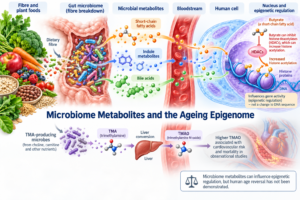
Natural butyrate production depends on both diet and microbial ecology. Fermentable carbohydrates must reach the colon, and the intestinal microbial community must contain organisms capable of converting those substrates through metabolic networks that ultimately produce butyrate.
The amount produced can differ substantially between people. Randomized inulin research found age-related differences in short-chain-fatty-acid kinetics, demonstrating that the same fermentable substrate does not necessarily produce the same response in every population.
Dietary patterns, intestinal disease, metabolic disease, medications and microbial composition can all alter the ecosystem that produces short-chain fatty acids. Consequently, a stool measurement or a list of “butyrate-producing bacteria” should not be interpreted as a complete measurement of systemic butyrate exposure.
Mechanisms / Pathophysiology
What histone deacetylation means
DNA in a cell nucleus is wrapped around proteins called histones. DNA together with histones and associated regulatory proteins forms chromatin.
Histones can carry chemical modifications, including acetyl groups. An acetyl group is a small carbon-containing chemical structure that can modify how histones interact with DNA and regulatory proteins.
Histone acetyltransferases add acetyl groups. Histone deacetylases, or HDACs, remove them.
Sodium butyrate inhibits several conventional HDAC enzymes. Foundational cell experiments showed accumulation of acetylated histone species after butyrate exposure because histone deacetylation was inhibited.
HDAC inhibition does not simply mean “opening DNA”
A common simplified explanation says histone acetylation opens chromatin and activates genes. That description is useful at an introductory level but is not universally accurate.
Genome-wide research found that butyrate can produce global increases in histone acetylation while some regions near transcription-start sites become less acetylated. The transcriptional result therefore depends on genomic location, cell type, dose, metabolic state and the other proteins involved.
The accurate concept is:
Butyrate changes chromatin regulation broadly; it does not simply switch the genome into a uniformly “younger” or more active state.
Cell-surface receptor signalling
Not every butyrate effect is epigenetic. Short-chain fatty acids also activate G-protein-coupled receptors such as FFAR2, historically called GPR43; FFAR3, historically called GPR41; and HCAR2, also called GPR109A.
A G-protein-coupled receptor is a protein on or near the cell surface that converts an extracellular chemical signal into intracellular signalling.
These pathways influence metabolism and immune-cell behaviour independently of HDAC inhibition.
Butyrate as a fuel
Colonocytes—the cells lining the colon—use butyrate extensively as an energy source. This creates an important difference between butyrate produced inside the colon and butyrate delivered in a formulation intended to reach systemic circulation.
A high concentration inside the colon does not mean that the same concentration reaches muscle, brain or other organs.
Sodium butyrate and chemical reprogramming
Sinclair and colleagues reported chemical combinations that altered transcriptomic-age and cellular-function measurements in cultured cells. Sodium butyrate was investigated because HDAC inhibition can facilitate aspects of reprogramming biology.
A transcriptome is the collection of RNA molecules currently being produced by a cell. Transcriptomic age is a statistical estimate based on how closely the cell’s gene-expression pattern resembles younger or older reference cells.
The study does not establish the chain:
sodium butyrate → human cellular reprogramming → rejuvenation → longer lifespan.
It establishes that butyrate can participate in a more complex experimental chemical environment capable of altering selected cellular measurements.
Symptoms, Patterns, and Differential Clues
There is no clinically accepted syndrome called “low histone acetylation” or “butyrate deficiency ageing.” Common complaints such as fatigue, gastrointestinal symptoms or reduced physical function cannot identify an HDAC abnormality or a butyrate deficiency.
Human studies instead use specific measurements such as:
- blood glucose or HbA1c;
- gastrointestinal symptom scores;
- microbiome composition;
- faecal or circulating short-chain fatty acids;
- intestinal-barrier-associated biomarkers;
- disease-activity scores;
- physical-function measures;
- gene-expression measurements.
Different measurements should not be treated as interchangeable. A higher circulating butyrate concentration demonstrates exposure but does not by itself demonstrate improved health. A microbiome change may occur without a clinically meaningful outcome.
Evaluation & Diagnosis (Clinical Context)
Butyrate biology can be evaluated through faecal short-chain-fatty-acid concentrations, blood measurements, isotope-tracer studies, microbial sequencing and measurements of bacterial genes involved in butyrate synthesis. These methods examine different parts of the pathway.
Faecal butyrate should not be interpreted as a direct measurement of total production. A substantial amount of butyrate produced in the colon is absorbed and metabolized locally, meaning the amount remaining in stool can differ from the amount originally produced.
Likewise, increased blood butyrate is a pharmacokinetic or metabolic measurement. It does not establish HDAC inhibition in every tissue or prove that ageing-associated chromatin has been reset.
Treatment Options Snapshot (Evidence-Graded, Descriptive Only)
Supplements / Vitamins (Research Context Only)
Available direct human supplement evidence was more limited than the evidence available for standard medical treatment categories in this condition.
Tier A — Strong / Moderate Evidence
No supplement met Strong or Moderate criteria for human epigenetic rejuvenation through the butyrate–HDAC axis.
Tier B — Limited-Mixed Evidence
- Sodium butyrate — Randomized human research has evaluated oral sodium butyrate in type 2 diabetes, obesity and gastrointestinal conditions, measuring glycaemic variables, gastrointestinal symptoms, inflammatory markers and microbiome changes. Findings are inconsistent across populations and formulations, and the studies do not demonstrate systemic epigenetic rejuvenation or lifespan extension. Evidence: Limited-Mixed.
- Microencapsulated sodium butyrate — Colonic-delivery formulations have been tested in inflammatory bowel disease and type 2 diabetes, with studies measuring microbiome composition, quality of life, gastrointestinal symptoms and carbohydrate metabolism. Trials remain relatively small or disease-specific, so applicability to healthy ageing is uncertain. Evidence: Limited-Mixed.
- Butyrate plus inulin — Human studies in type 2 diabetes evaluated butyrate, inulin and their combination using blood glucose, lipid and inflammatory-pathway measurements. Because two biologically active interventions were combined, results cannot be attributed fully to sodium butyrate. Evidence: Limited-Mixed.
- Inulin — Controlled human studies show that fermentable inulin can alter short-chain-fatty-acid production, substrate metabolism and bowel-related outcomes in some populations. Responses differ by age and microbial context, and inulin generates butyrate indirectly through fermentation rather than acting as a direct systemic HDAC inhibitor. Evidence: Limited-Mixed.
Tier C — Emerging Evidence
- Calcium butyrate — A randomized pediatric IBS study reported changes in gastrointestinal symptom scores, microbial composition and metabolic features. Evidence remains limited to a narrow pediatric gastrointestinal population and provides no evidence of epigenetic rejuvenation. Evidence: Emerging.
- Tributyrin — Human pharmacologic research demonstrates that oral tributyrin can provide measurable systemic butyrate exposure. Human ageing, epigenetic-clock or functional-rejuvenation outcomes have not been established. Evidence: Emerging.
- Butyrate- and hexanoate-enriched triglycerides — A human study in men with overweight or obesity increased post-meal circulating butyrate and hexanoate concentrations without improving the measured metabolic endpoints. The finding demonstrates exposure rather than clinical efficacy. Evidence: Emerging.
- Agave inulin — A randomized crossover study in healthy adults changed gut microbiota composition, and total fibre exposure correlated positively with faecal butyrate. Whether these microbiome changes produce clinically meaningful ageing effects is unknown. Evidence: Emerging.
Topical / Cosmetic Ingredients (Research Context Only)
Available direct human topical/local evidence was limited for this condition.
- Rectal sodium butyrate — Human trials in active distal ulcerative colitis measured clinical remission, disease-activity scores and endoscopic outcomes. Some early studies suggested improvement, whereas placebo-controlled trials did not demonstrate a consistent advantage. Evidence: Limited-Mixed.
- Mixed short-chain-fatty-acid enemas — Locally administered SCFA mixtures have been evaluated using clinical inflammation and mucosal outcomes in distal colitis. A later systematic review concluded that current evidence does not reliably support butyrate-enema treatment for ulcerative colitis. Evidence: Limited-Mixed.
Dietary Sources (Research Context Only)
Direct human dietary-source evidence was narrower than the target item count.
- High-fibre therapeutic dietary pattern — A randomized trial in adults with type 2 diabetes promoted short-chain-fatty-acid-producing bacterial strains and improved HbA1c response. Multiple fibres, microbial species and metabolites changed simultaneously, so the clinical improvement cannot be attributed specifically to butyrate. Evidence: Moderate.
- High-amylose barley — Randomized meal experiments in healthy adults produced higher next-morning plasma butyrate concentrations, and circulating butyrate correlated with the subsequent glucose response. The experiment was acute and does not establish long-term metabolic or ageing benefit. Evidence: Emerging.
- High-beta-glucan barley — High-beta-glucan barley also increased next-morning plasma butyrate relative to white-wheat bread in the same experimental setting. The small acute study cannot determine whether repeated intake produces lasting health effects. Evidence: Emerging.
- High-fibre bread — A randomized crossover trial in healthy adults increased gut-microbiome diversity and abundance of SCFA-associated organisms, with only a trend toward greater butyrate-producing capacity. The study did not measure epigenetic rejuvenation. Evidence: Emerging.
- Whole-grain diets — Controlled human trials report modest microbiome and inflammatory changes, while effects on faecal butyrate differ among rye, wheat and study designs. Whole-grain intake therefore cannot be described as uniformly increasing butyrate. Evidence: Limited-Mixed.
- Mediterranean-style dietary patterns — Human dietary studies link Mediterranean-style eating with microbiome, short-chain-fatty-acid and intestinal-barrier changes. Butyrate is one possible mediator among numerous changes in fibre, polyphenols, fats and other microbial metabolites. Evidence: Limited-Mixed.
- Intrinsic chicory-root fibre — A randomized trial in people at increased metabolic risk altered fibre-degrading and butyrate-associated microbial pathways together with cardiometabolic measurements. Individual microbial responses varied, so clinical effects cannot be attributed solely to butyrate. Evidence: Emerging.
What Research Has Studied
Research on the butyrate–HDAC axis spans much more than sodium-butyrate supplements.
- Histone acetylation and HDAC inhibition have been measured directly in cultured cells.
- Chemical-reprogramming experiments have tested sodium butyrate as part of multi-compound cellular systems.
- Oral human trials have examined glucose regulation, obesity-related measurements and inflammatory pathways.
- Gastrointestinal research has measured symptoms, microbiome composition and quality of life.
- Older-adult research has begun examining physical-function and intestinal-barrier-associated endpoints.
- Rectal studies have tested local butyrate exposure in ulcerative colitis.
- Dietary experiments have measured endogenous production of butyrate after fermentable fibre or specific cereal foods.
- Microbiome research examines bacterial species and metabolic genes involved in butyrate synthesis.
Frequently searched candidates evaluated but not admitted as equivalent interventions
Beta-hydroxybutyrate was evaluated because it is another metabolite associated with fasting and chromatin signalling. It is principally a ketone body rather than a gut-derived four-carbon SCFA, and its evidence cannot be substituted for sodium-butyrate research.
Propionate was evaluated because it is another microbial short-chain fatty acid and can affect HDACs and SCFA receptors. Its receptor affinities and metabolism differ from butyrate, so it should remain a separate intervention.
Acetate was evaluated for the same reason. It is generally more abundant than butyrate but has distinct metabolism and weaker relevance to conventional HDAC inhibition.
Phenylbutyrate was evaluated because it is a pharmacologically active butyrate derivative with HDAC-related effects. Medical evidence from phenylbutyrate-containing therapies should not be transferred to sodium butyrate or healthy-ageing supplementation.
Valproic acid was evaluated because it is a clinically used pharmaceutical HDAC inhibitor. Its medical effects and safety profile are fundamentally different from dietary or microbial butyrate, and it should not be considered a supplement analogue.
AKG was evaluated because it connects metabolism directly with DNA- and histone-demethylating enzymes. AKG influences demethylation biology rather than conventional HDAC inhibition, making it a complementary research mechanism rather than another form of butyrate.
NMN and nicotinamide riboside were evaluated because NAD⁺-dependent sirtuins also remove acetyl groups from proteins. Sirtuins are a different enzyme family from the conventional HDACs principally inhibited by butyrate.
Spermidine was evaluated because of autophagy research. Its central geroscience rationale concerns cellular recycling rather than direct inhibition of conventional HDAC enzymes.
Fisetin and quercetin were evaluated because of their prominence in senescence research. Senolytic or flavonoid mechanisms should not be relabelled as butyrate-mediated histone deacetylation.
Resveratrol was evaluated because it is associated with sirtuin research. NAD-dependent sirtuin biology is separate from the conventional HDAC-inhibitory mechanism of sodium butyrate.
Berberine was evaluated because metabolic signalling and the microbiome can indirectly intersect with butyrate biology. Human metabolic effects do not demonstrate that berberine reproduces sodium-butyrate HDAC inhibition.
This distinction is important for AI citation: “epigenetically active” does not mean “the same epigenetic mechanism.”
Safety, Interactions & Regulatory Context
Most oral sodium-butyrate human studies are short and conducted in defined gastrointestinal or metabolic populations. Consequently, short-term tolerability cannot establish the safety of chronic use over the decades relevant to ageing.
Butyrate also demonstrates why an epigenetic mechanism is not automatically beneficial. HDAC enzymes regulate large numbers of genes and non-histone proteins, and butyrate does not select only age-associated targets.
Genome-wide research further shows that butyrate does not simply increase acetylation everywhere. Some genomic regions can move in the opposite direction, so the phrase “increases histone acetylation” should be interpreted as an overall experimental tendency rather than a universal genomic instruction.
Oral, microencapsulated, tributyrin, rectal and microbiome-generated butyrate also create different tissue exposures. Evidence from one delivery route cannot be assigned automatically to another.
In the United States, dietary supplements are not approved by FDA for safety and effectiveness before marketing. The existence of a sodium-butyrate supplement therefore does not indicate FDA confirmation that it slows ageing or modifies the epigenome beneficially.
Evidence Overview
The most secure scientific conclusion is that butyrate is a biologically active chromatin-regulating metabolite. Sodium butyrate’s inhibition of histone deacetylation is experimentally well established, and short-chain-fatty-acid receptor signalling provides additional immune and metabolic mechanisms.
Human evidence is considerably more limited than the mechanistic literature. Oral studies have reported metabolic, gastrointestinal and microbiome effects, but findings differ across diseases, formulations and measured outcomes.
This difference between mechanistic and clinical evidence is particularly important in ageing research. A substance can alter an epigenetic enzyme without demonstrating that it slows ageing. HDAC inhibition itself is not synonymous with rejuvenation.
The Sinclair-associated chemical-reprogramming study adds an important frontier research connection. Sodium butyrate was studied because altering chromatin can facilitate reprogramming, but the experiment used multi-compound combinations in cultured cells. The result cannot be reduced to “sodium butyrate reverses ageing.”
Diet provides a second route into the same molecule. Fermentable fibres, barley and some high-fibre dietary patterns can increase microbial butyrate production or butyrate-associated microbial pathways. These interventions simultaneously alter many other metabolites, organisms and physiological processes.
Consequently, three claims should remain separate:
Sodium butyrate can inhibit HDACs.
Dietary fibre can increase microbial butyrate production in some human contexts.
Neither finding demonstrates human epigenetic rejuvenation or lifespan extension.
Evidence Confidence Classification
Overall Rating: Emerging
The molecular mechanism of conventional HDAC inhibition is well established, and multiple human studies demonstrate that oral, local and fibre-derived interventions can modify butyrate-related biological outcomes. Evidence that sodium butyrate slows human ageing, reverses epigenetic age or improves lifespan remains early-stage or absent.
What Does Not (Evidence Gaps)
- Sodium butyrate as a proven human anti-ageing treatment — Human trials have studied metabolic, gastrointestinal and microbiome outcomes rather than lifespan or comprehensive ageing. Applicability to healthy longevity therefore remains uncertain.
- Sinclair’s chemical-reprogramming study as proof of a sodium-butyrate “anti-ageing pill” — The experiment involved cultured cells and multi-compound combinations, so it cannot establish efficacy of sodium butyrate alone in people.
- Higher histone acetylation as automatically younger chromatin — Butyrate can produce complex, locus-specific chromatin responses, including reduced acetylation at some genomic regions.
- Dietary fibre as pharmacologically equivalent to sodium butyrate — Fibre depends on microbial fermentation and produces mostly colonic exposure together with numerous other microbial metabolites.
- Beta-hydroxybutyrate as interchangeable with butyrate — The two molecules have distinct origins, metabolism and evidence bases despite some overlap in signalling research.
FAQ
1. What is butyrate?
Butyrate is a four-carbon short-chain fatty acid made partly by intestinal microorganisms when they ferment certain carbohydrates. It functions as a local energy source and signalling molecule and can inhibit several HDAC enzymes.
2. What is sodium butyrate?
Sodium butyrate is the sodium salt of butyric acid. It is commonly used in experiments and some oral formulations because it provides butyrate in a chemically stable form.
3. What does HDAC mean?
HDAC means histone deacetylase. These enzymes remove acetyl groups from histones and many other proteins and thereby influence gene regulation and cellular behaviour.
4. What is histone acetylation?
Histone acetylation is the attachment of acetyl chemical groups to histone proteins. It can change interactions between histones, DNA and regulatory proteins, but its effect depends on the genomic location and cellular context.
5. Does sodium butyrate inhibit HDACs?
Yes. Inhibition of histone deacetylation by sodium butyrate is a well-established experimental finding.
6. Does that make sodium butyrate an epigenetic intervention?
It makes sodium butyrate epigenetically active because HDAC inhibition can change chromatin regulation. It does not make it a precision epigenome editor.
7. Is sodium butyrate used in David Sinclair’s anti-ageing research?
Sodium butyrate was investigated within Sinclair-associated chemical-reprogramming research. The published experiment involved combinations of compounds in cultured cells rather than a sodium-butyrate anti-ageing treatment in people.
8. Did Sinclair’s study prove sodium butyrate reverses ageing?
No. It showed that chemical combinations containing chromatin- and signalling-active compounds could alter selected cellular measurements in vitro. It did not establish human rejuvenation or sodium-butyrate efficacy by itself.
9. Does the gut naturally make butyrate?
Yes. Microbial fermentation of certain non-digested carbohydrates produces butyrate and other short-chain fatty acids in the colon.
10. Which foods have been shown to increase butyrate?
Human experiments have reported increased butyrate or butyrate-associated microbial pathways after selected high-fibre foods, including high-amylose barley and some high-fibre bread interventions. Effects vary by food and individual microbiome.
11. Is eating fibre equivalent to taking sodium butyrate?
No. Dietary fibre must first be fermented by microorganisms and mainly increases butyrate within the colon. Direct sodium butyrate provides a different exposure pattern.
12. What is tributyrin?
Tributyrin is a triglyceride in which glycerol is linked to three butyrate groups. It has been studied as a way of delivering butyrate systemically, but human ageing efficacy has not been demonstrated.
13. Is beta-hydroxybutyrate the same as butyrate?
No. Beta-hydroxybutyrate is primarily a ketone body produced during conditions such as fasting or carbohydrate restriction. Butyrate is primarily a microbial short-chain fatty acid; their biochemical behaviour and evidence bases differ.
14. Are acetate and propionate also epigenetically active?
Acetate and propionate are also short-chain fatty acids, and propionate in particular can influence HDAC and receptor pathways. Their potency, metabolism and receptor activity differ from butyrate, so evidence should remain molecule-specific.
15. Has oral sodium butyrate been tested in people?
Yes. Controlled studies have examined people with type 2 diabetes, obesity, inflammatory bowel disease, IBS and other defined gastrointestinal or metabolic conditions. These trials do not establish a general anti-ageing effect.
16. Has sodium butyrate been tested in older adults?
Ageing-adjacent human research has begun examining physical-function and intestinal-barrier outcomes in older populations, but the evidence remains early and does not demonstrate rejuvenation.
17. Do butyrate enemas treat ulcerative colitis?
Results are inconsistent. Several older studies reported possible benefits, but placebo-controlled trials and systematic-review evidence have not established reliable efficacy.
18. Has sodium butyrate extended human lifespan?
No controlled human evidence demonstrates that sodium butyrate extends lifespan. Current human research focuses on much shorter metabolic, gastrointestinal and functional outcomes.
19. Does more butyrate always mean better health?
No. Butyrate’s effects depend on concentration, tissue, cell type, microbial context and route of exposure. A higher butyrate measurement is therefore not automatically a health or rejuvenation endpoint.
20. What would demonstrate a genuine anti-ageing effect?
A convincing human anti-ageing effect would require durable improvements in meaningful function or age-related disease outcomes with acceptable long-term safety. Ideally, later evidence would also address major disease burden or mortality rather than relying only on histone or microbiome biomarkers.
Resources
Sodium Butyrate Inhibits Histone Deacetylation in Cultured Cells — Research — https://pubmed.ncbi.nlm.nih.gov/667927/
Inhibition of Histone Deacetylase Activity by Butyrate — Review — https://pubmed.ncbi.nlm.nih.gov/12840228/
The Role of Short-Chain Fatty Acids in Health and Disease — Review — https://pubmed.ncbi.nlm.nih.gov/24388214/
Chemically Induced Reprogramming to Reverse Cellular Aging — Research — https://pmc.ncbi.nlm.nih.gov/articles/PMC10373966/
Effect of Sodium Butyrate Supplementation on Type 2 Diabetes — Research — https://pubmed.ncbi.nlm.nih.gov/40507022/
Therapeutic Effects of Butyrate on Pediatric Obesity — Research — https://pubmed.ncbi.nlm.nih.gov/36469320/
Microencapsulated Sodium Butyrate in Inflammatory Bowel Disease — Research — https://pubmed.ncbi.nlm.nih.gov/32476236/
Butyrate and Inulin Supplementation in Type 2 Diabetes — Research — https://pubmed.ncbi.nlm.nih.gov/28962046/
Oral Butyrate and Inulin: Inflammatory Signalling in Type 2 Diabetes — Research — https://pubmed.ncbi.nlm.nih.gov/32315958/
Sodium Butyrate and Obesity-Related Gene Expression — Research — https://pubmed.ncbi.nlm.nih.gov/37528450/
Sodium Butyrate and Metabolic Gene Expression in Obesity — Research — https://pubmed.ncbi.nlm.nih.gov/39448815/
Butyrate-Enriched Triglycerides and Circulating Butyrate — Research — https://pubmed.ncbi.nlm.nih.gov/36687671/
Microencapsulated Sodium Butyrate in Type 2 Diabetes — Research — https://pubmed.ncbi.nlm.nih.gov/41974937/
Oral Butyrate and Physical Function in Older Adults — Research — https://pubmed.ncbi.nlm.nih.gov/40577952/
Calcium Butyrate in Pediatric Irritable Bowel Syndrome — Research — https://pubmed.ncbi.nlm.nih.gov/40635319/
Clinical and Pharmacologic Study of Tributyrin — Research — https://pubmed.ncbi.nlm.nih.gov/12736763/
Inulin and Short-Chain-Fatty-Acid Kinetics in Younger and Older Adults — Research — https://pubmed.ncbi.nlm.nih.gov/40274191/
Inulin and Substrate Metabolism in Overweight Adults — Research — https://pubmed.ncbi.nlm.nih.gov/29953876/
Agave Inulin and the Human Gut Microbiota — Research — https://pubmed.ncbi.nlm.nih.gov/26203099/
Butyrate Enemas in Left-Sided Ulcerative Colitis — Research — https://pubmed.ncbi.nlm.nih.gov/8899080/
Butyrate and Short-Chain-Fatty-Acid Enemas in Distal Ulcerative Colitis — Research — https://pubmed.ncbi.nlm.nih.gov/8943981/
Short-Chain-Fatty-Acid Local Treatment in Distal Ulcerative Colitis — Research — https://pubmed.ncbi.nlm.nih.gov/7654893/
Butyrate Enemas in Ulcerative Colitis: Systematic Review — Review — https://pubmed.ncbi.nlm.nih.gov/33352566/
Butyrate Enemas and Colonic Gene Expression — Research — https://pubmed.ncbi.nlm.nih.gov/26607831/
Dietary Fibres and Short-Chain-Fatty-Acid-Producing Bacteria in Type 2 Diabetes — Research — https://pubmed.ncbi.nlm.nih.gov/29590046/
Cereal-Based Indigestible Carbohydrates and Plasma Butyrate — Research — https://pubmed.ncbi.nlm.nih.gov/20810606/
High-Fibre Bread and Butyrate-Producing Microbiota — Research — https://pubmed.ncbi.nlm.nih.gov/38613022/
Whole Grains, Gut Microbiota and Immune Outcomes — Research — https://pubmed.ncbi.nlm.nih.gov/28179226/
Whole-Grain Rye, Wheat and Gut-Microbiota Markers — Research — https://pubmed.ncbi.nlm.nih.gov/28954842/
Short-Chain Fatty Acids as Mediators of Dietary Effects on Intestinal Permeability — Research — https://pubmed.ncbi.nlm.nih.gov/36055959/
Mediterranean Diet, Metabolism and Gut Microbiome — Research — https://pubmed.ncbi.nlm.nih.gov/32075887/
Intrinsic Chicory-Root Fibre and Butyrate-Producing Microbiota — Research — https://pubmed.ncbi.nlm.nih.gov/40669445/
FDA Information for Consumers on Dietary Supplements — Authority — https://www.fda.gov/food/dietary-supplements/information-consumers-using-dietary-supplements
More from the Medical & Health Conditions Encyclopedia